
A migraine is a neurological condition that causes intense, throbbing head pain—usually on one side—lasting anywhere from 4 to 72 hours. Common migraine symptoms include nausea, sensitivity to light and sound, and sometimes visual disturbances called aura. About 12% of Americans experience migraines, according to the National Institutes of Health (NIH).
Headaches are common. Migraines are something else entirely. The throbbing pain, the nausea, the sensitivity to light so severe that even a dim room feels unbearable—migraines can stop your day cold. Yet despite affecting roughly 1 in 5 women and 1 in 16 men in the United States (according to Mayo Clinic neurologist Dr. Amaal Starling), migraines are frequently misunderstood, misdiagnosed, and undertreated.
Part of the problem is that migraine symptoms vary so much from person to person. Some people experience visual disturbances before the pain begins. Others feel drained and foggy for a full day after the headache fades. And some have debilitating attacks multiple times a month, while others only experience them a few times a year.
This guide covers everything you need to know about migraines—what they are, what migraine symptoms to look out for, what triggers them, how they’re diagnosed, and what treatment options are available. You’ll also find a breakdown of conditions that may be linked to migraines and a clear guide on when to seek immediate medical attention.
If you’ve ever wondered whether what you’re experiencing is “just a headache” or something more, read on.
What Is a Migraine?
A migraine is a neurological condition characterized by recurrent episodes of moderate to severe head pain, typically throbbing or pulsing in nature. The pain is often localized to one side of the head, though it can occur on both sides. Attacks can last anywhere from 4 to 72 hours when left untreated.
Migraines are not simply bad headaches. They’re a complex neurological event involving changes in brain chemistry, nerve activity, and blood flow. Research from Mayo Clinic points to interactions between the brainstem and the trigeminal nerve—a major pain pathway—as well as imbalances in brain chemicals like serotonin and calcitonin gene-related peptide (CGRP).
Because migraine is genetic, it tends to run in families. If one parent has migraines, there’s approximately a 50% chance their child will develop them too.
How Is a Migraine Different from a Headache?
A tension headache typically causes dull, steady pressure on both sides of the head. Migraines involve throbbing pain that often worsens with movement, frequently accompanied by nausea, vomiting, and extreme sensitivity to light and sound. Migraines can also include warning symptoms before the headache begins—something tension headaches don’t typically cause.
What Are the Symptoms of a Migraine?
Migraine symptoms don’t always begin with head pain. For many people, a migraine unfolds in distinct phases, each with its own set of signs.
Prodrome (1–2 Days Before the Attack)
Early warning signs can appear up to 48 hours before a migraine hits. These include:
- Mood shifts (ranging from irritability to unusual elation)
- Food cravings
- Neck stiffness
- Frequent yawning
- Fluid retention and increased urination
- Constipation
Aura (Up to 1 Hour Before or During the Attack)
Aura affects roughly one-third of people with migraines, according to Mayo Clinic. Aura refers to temporary, reversible neurological symptoms, which are most commonly visual but can affect other senses:
- Seeing flashing lights, bright spots, or zigzag lines
- Temporary blind spots or vision loss
- Pins and needles sensation in an arm, leg, or face
- Weakness or numbness on one side of the body
- Difficulty speaking
Each aura symptom typically builds gradually over several minutes and lasts up to 60 minutes.
Attack Phase (4–72 Hours)
The headache itself is the most recognized migraine symptom. During this phase, you may experience:
- Throbbing or pulsing pain, usually on one side of the head
- Sensitivity to light, sound, smell, and touch
- Nausea and vomiting
- Pain that worsens with routine physical activity
Postdrome (Up to 24 Hours After)
After the headache subsides, many people feel exhausted, mentally foggy, or “washed out.” Sudden head movements can briefly bring the pain back. This phase can last up to a full day.
What Is the Difference Between Migraine With Aura and Migraine Without Aura?
Migraine with aura (previously known as “classic migraine”) involves neurological symptoms that appear before or during the headache phase. The most common aura symptoms are visual—flashing lights, zigzag patterns, or temporary loss of vision. Less commonly, aura can cause speech difficulties or sensory disturbances.
Migraine without aura is the more prevalent type. The headache phase begins without any preceding neurological warning signs. This is often the form that goes undiagnosed, as the absence of aura can make it seem more like a “regular” headache.
A third type, silent migraine (or acephalgic migraine), involves aura symptoms without any significant headache. This can be particularly confusing because the visual and sensory disturbances appear without the pain most people associate with migraines.
Knowing which type you experience matters for treatment decisions. Migraine with aura, for instance, is associated with a slightly higher cardiovascular risk—something that should factor into conversations with your doctor about prevention.
What Are the Most Common Migraine Triggers?
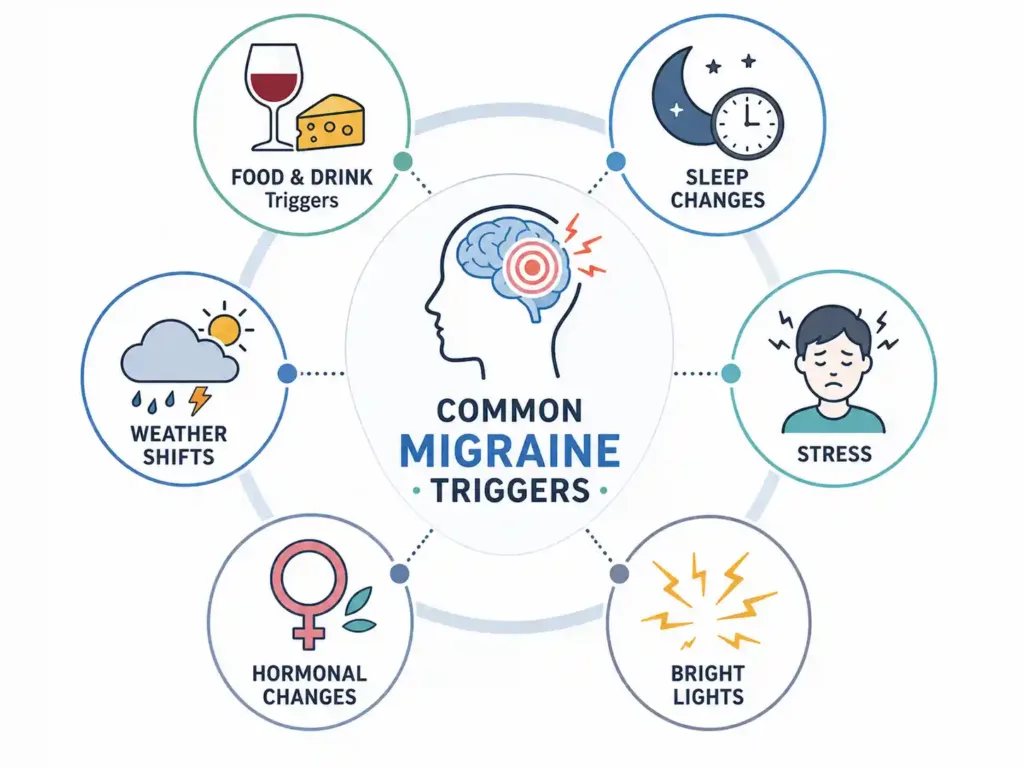
Migraine triggers are factors that provoke an attack in someone already susceptible to migraines. They don’t cause migraines on their own; rather, they push the brain past a threshold. Common triggers include:
- Hormonal changes: Fluctuations in estrogen—during menstruation, pregnancy, or perimenopause—are among the most well-documented triggers.
- Stress: Emotional and physical stress is a leading trigger. Even the “let-down” after a stressful period can bring on an attack.
- Sleep disruptions: Both too little and too much sleep can trigger migraines.
- Dietary factors: Aged cheeses, alcohol (especially red wine), processed meats, foods containing MSG or aspartame, chocolate, and caffeine are commonly reported triggers. Skipping meals or fasting is also a trigger.
- Sensory stimulation: Bright or flashing lights, loud sounds, and strong odors (such as perfume or cigarette smoke).
- Weather changes: Shifts in barometric pressure or temperature can provoke attacks in susceptible individuals.
- Medications: Oral contraceptives and certain vasodilators can worsen migraines in some people.
- Physical exertion: Intense exercise or physical strain occasionally triggers attacks.
Triggers vary significantly from person to person. Keeping a migraine diary—recording what you ate, how you slept, your stress level, and weather conditions before each attack—can help identify your personal pattern.
What Causes Migraines?
The exact mechanisms behind migraines aren’t fully understood, but research points to a combination of genetic predisposition and environmental factors. At a biological level, migraines appear to involve changes in brainstem activity and alterations in brain chemical levels—particularly serotonin and CGRP (calcitonin gene-related peptide).
During a migraine, abnormal electrical activity spreads across the brain’s cortex, triggering the trigeminal nerve. This activates inflammatory signals and dilates blood vessels, producing the hallmark throbbing pain. CGRP plays a central role in this process, which is why CGRP-targeting medications have become a major focus of migraine treatment research in recent years.
Because migraines are genetic, your family history is a significant risk factor. Women are three times more likely than men to experience migraines, with hormonal fluctuations—particularly changes in estrogen—playing a key role. Migraines can begin at any age, though they often first appear during adolescence and tend to peak during a person’s 30s.
How Are Migraines Diagnosed?
There is no specific lab test or imaging study that confirms a migraine diagnosis. Migraine is a clinical diagnosis—meaning it’s based on your reported symptoms, medical history, and a physical and neurological examination.
To rule out other causes of headache, your doctor may order:
- Blood tests to identify infections or other systemic conditions
- MRI to check for structural brain abnormalities
- CT scan if a stroke or other acute condition is suspected
According to Mayo Clinic, a useful diagnostic screening tool focuses on three core features: headache associated with sensitivity to light, decreased function, and nausea. If you have these symptoms regularly, a migraine diagnosis is likely—but always confirm with a healthcare provider.
Tracking your headaches before your appointment is genuinely useful. Note the date, duration, intensity, associated symptoms, and any possible triggers. This information significantly speeds up the diagnostic process.
Tips for Migraine Relief and Prevention
Lifestyle modifications can meaningfully reduce how often migraines occur and how severe they are when they do. Mayo Clinic’s “SEEDS” method offers a practical framework:
- S – Sleep: Maintain a consistent sleep schedule. Aim for 7–8 hours per night and limit screen use before bed.
- E – Exercise: Regular physical activity reduces migraine frequency. Start small—even five minutes a few times a week helps—and build from there.
- E – Eat: Don’t skip meals. Eat well-balanced meals at regular intervals and stay well hydrated throughout the day.
- D – Diary: Track your migraines using a calendar or app. Record when attacks occur, how long they last, what you ate, how you slept, and your stress level.
- S – Stress management: Mindfulness, meditation, biofeedback, and therapy are all effective tools. Reducing stress doesn’t just improve your overall health—it directly lowers migraine frequency.
Avoiding medication overuse is also critical. Taking pain relievers more than 10 to 14 days per month can lead to medication overuse headaches, which create a cycle that’s difficult to break.
What Conditions May Be Linked to Migraines?
Migraines rarely exist in isolation. Research increasingly shows associations between migraines and several other medical conditions. Understanding these connections can improve both diagnosis and overall care.
Can a Sinus Headache Actually Be a Migraine?
Many people who think they have sinus headaches are actually experiencing migraines. The American Migraine Foundation notes that self-diagnosed sinus headaches are frequently migraines in disguise, particularly when they occur without fever, discolored nasal discharge, or a confirmed sinus infection. Migraines can produce sinus-like symptoms—facial pressure, runny nose, and nasal congestion—because they activate the same nerve pathways. If you’re treating recurrent “sinus headaches” without a clear sinus infection, it’s worth discussing migraine with your doctor.
Is There a Link Between Celiac Disease and Migraines?
Yes, research suggests an association. A study published in the American Journal of Medicine found that migraine was associated with celiac disease, and that adopting a gluten-free diet led to improvement in migraine symptoms for some patients. A 2020 article in ScienceDirect noted that gluten may worsen migraine attacks in people with celiac disease or non-celiac gluten sensitivity (NCGS). If you have celiac disease and experience frequent migraines, discussing dietary management with your gastroenterologist may be worthwhile.
Can Autoimmune Disease Trigger Migraines?
The connection between autoimmune conditions and migraines is an active area of research. A 2018 paper published in Clinical Neurology and Neurosurgery explored whether migraine itself may have an autoimmune component, finding evidence of reduced regulatory T cells in the peripheral blood of migraine patients—a marker of immune dysregulation. Conditions such as lupus (systemic lupus erythematosus) are also associated with headache and migraine. People managing autoimmune conditions who experience frequent migraines should flag both conditions with their treating physician.
What Is the Relationship Between Heart Disease and Migraines?
The cardiovascular connection is one of the most clinically significant migraine-related associations. A large Danish cohort study published in The BMJ found that migraine was associated with increased risks of myocardial infarction, ischemic stroke, hemorrhagic stroke, venous thromboembolism, and atrial fibrillation. Harvard Medical School also reports that people with migraine with aura carry a slightly elevated risk of heart attack, stroke, and cardiovascular death. This does not mean migraines cause heart disease, but it does mean that people with migraines—especially migraine with aura—should be proactive about cardiovascular risk factor management with their healthcare provider.
Are Crohn’s Disease and Migraines Connected?
Research published in PubMed Central found that the pooled prevalence of migraine in patients with inflammatory bowel disease (IBD) was 19%—rising to 24% specifically among those with Crohn’s disease. The link is thought to involve shared inflammatory pathways and disruptions to gut microbiota. If you have Crohn’s disease and notice a pattern of migraines, inform both your gastroenterologist and neurologist so they can coordinate care effectively.
When Should You See a Doctor About Migraine Symptoms?
If you experience regular headaches that interfere with your daily life, scheduling an appointment with your healthcare provider is the right call. Most migraines can be managed effectively with the right treatment plan—but many people go undiagnosed and undertreated for years.
Go to the emergency room immediately if you experience any of the following:
- A sudden, extremely severe headache—often described as “the worst headache of your life” or a “thunderclap” headache
- Headache accompanied by confusion, slurred speech, or trouble speaking
- Weakness or numbness on one side of your face or body
- Sudden vision loss or double vision
- Fever combined with a stiff neck and headache (which may indicate meningitis)
- Headache following a head injury or accident
- New headache pain that develops after age 50
These symptoms can indicate a stroke, meningitis, or other serious medical emergency. Do not wait to see if the pain passes—seek emergency care immediately.
Frequently Asked Questions About Migraine Symptoms
What are the first signs of a migraine coming on?
How long does a migraine typically last?
What does a migraine with aura look like?
What is the difference between a sinus headache and a migraine?
Are migraines hereditary?
What foods most commonly trigger migraines?
Can migraines be cured?
Is it safe to take pain medication every time I get a migraine?
Taking Control of Your Migraines
Migraines are a genuine neurological condition—not something to push through or dismiss. The combination of throbbing pain, nausea, sensory sensitivity, and post-attack fatigue can affect your work, relationships, and quality of life in meaningful ways. The good news? Effective treatment options have expanded considerably, particularly with the arrival of CGRP-targeting therapies that work for patients who haven’t responded to traditional medications.
Start by tracking your attacks—timing, duration, triggers, and symptoms. Bring that information to your doctor. A neurologist or headache specialist can help you build a treatment plan tailored to your specific pattern of migraines, whether that means acute medication, preventive therapy, lifestyle changes, or a combination of all three.
Migraines can be managed. The first step is understanding what you’re dealing with.