Table of Contents
In the past, regulating blood sugar required numerous finger sticks every single day. Continuous glucose monitors have revolutionized this process entirely.
A continuous glucose monitor (CGM) tracks your sugar levels 24/7, issues notifications when readings are abnormal, and provides insights that a standard glucometer simply cannot match.
Yet, with so many excellent models on the market in 2026, picking the best one can feel daunting. This guide simplifies the details to help you make a sure and knowledgeable choice.
What Is a Continuous Glucose Monitor?
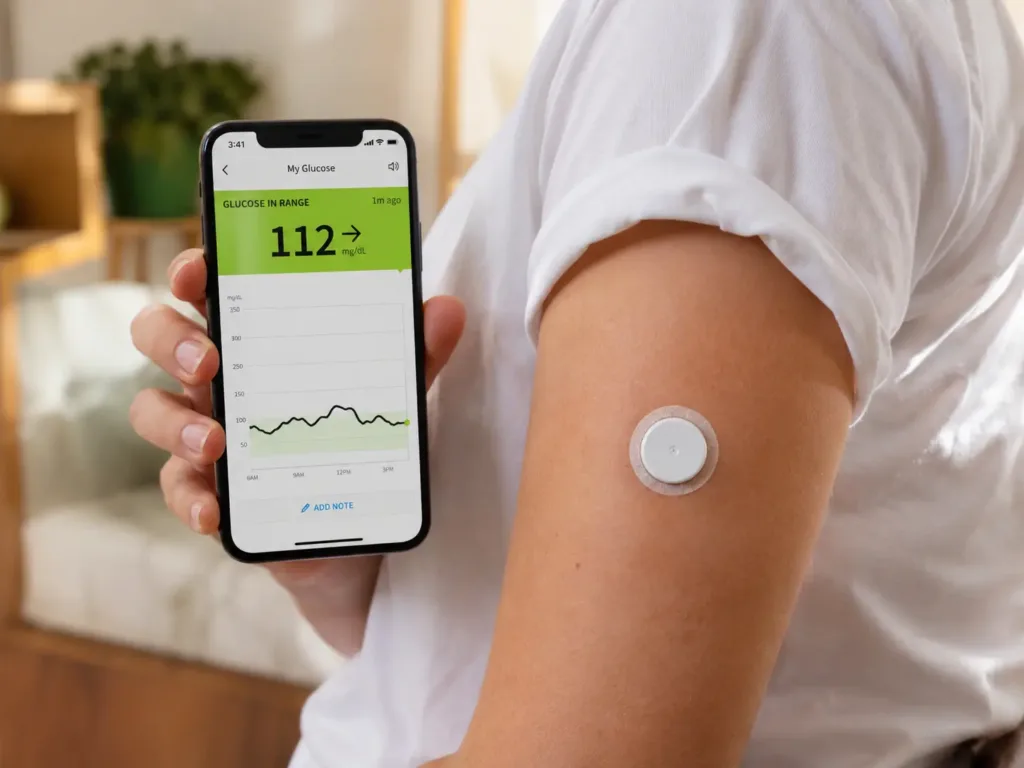
A continuous glucose monitor (CGM) is a small wearable device that automatically tracks your blood sugar levels throughout the day and night.
It replaces frequent finger-prick tests by using a tiny sensor inserted just under the skin, usually on the arm or abdomen, to measure glucose in the fluid between your cells, called interstitial fluid.
The sensor sends glucose readings to a receiver or smartphone app every few minutes, giving you a real-time picture of how your blood sugar is changing. You can see whether it is rising, falling, or staying steady, which helps you make better decisions about food, exercise, insulin, and medication.
Most modern CGMs also send alerts when your glucose goes too high or too low, which is especially helpful for preventing dangerous drops overnight.
Who Should Consider Using a CGM?
CCGMs are no longer just for people with Type 1 diabetes. The technology has become more advanced and accessible, making it helpful for a much wider range of people.
- Type 1 diabetes patients who need tight, continuous glucose control and rely on insulin dosing throughout the day.
- Type 2 diabetes patients who want to see how their meals, physical activity, and medications affect blood sugar trends.
- People with prediabetes who want early insight into blood sugar spikes before they turn into a more serious problem.
- Health-focused individuals who want to understand how their body responds to specific foods, workouts, sleep, or stress levels.
Read about Insulin Resistance Treatment.
If you have been using a traditional glucometer and only checking a few times a day, a continuous glucose monitor can give you a much more complete picture of what your glucose is doing between those checks, helping you make more informed decisions about your health.
Key Features to Look for Before Buying a CGM
Not all continuous glucose monitors (CGMs) are built the same, so it helps to compare a few core features before you choose one.
- Accuracy (MARD score): Mean Absolute Relative Difference shows how close CGM readings are to actual blood glucose; a lower MARD means better accuracy, and most leading devices today fall roughly in the 7–10% range.
- Wear duration: Sensors typically last about 7 to 15 days, so longer wear means fewer changes and lower ongoing hassle.
- Warm-up time: Some CGMs need a 1–2 hour warm‑up period before showing reliable data, while others start giving readings much sooner.
- Smartphone compatibility: Make sure the CGM works with your iOS or Android device and offers an app with trends, graphs, and historical data so you can review patterns easily.
- Alerts and alarms: Look for customizable high and low glucose alerts, including urgent alerts for serious nighttime lows.
- Calibration requirement: Older or certain models may need finger‑stick calibration once or twice a day, while factory‑calibrated systems remove this step for added convenience.
- Cost per month: The sensor is a recurring cost, so always consider insurance coverage, co‑pays, and what you would pay out of pocket if it is not covered.
Read More about Diabetes and its Management
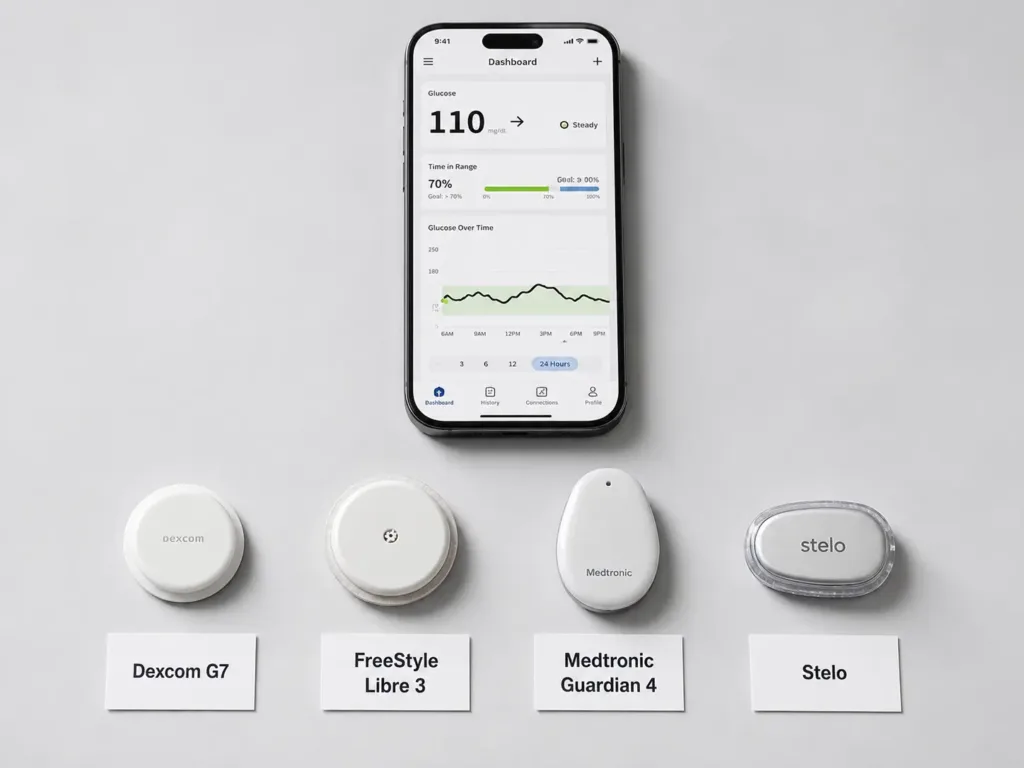
Top CGM Systems Compared in 2026
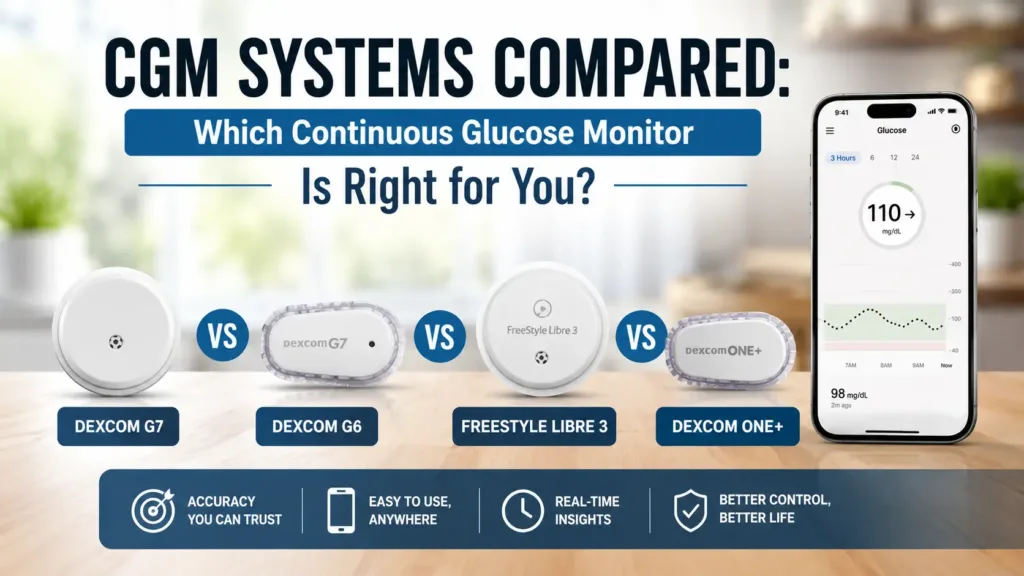
Dexcom G7
The Dexcom G7 is one of the most accurate and widely used continuous glucose monitors in 2026, with a reported MARD of about 8%, a 10‑day wear time, and a short 30‑minute warm‑up period, which is faster than many older CGM models.
Its sensor is smaller and more discreet than the Dexcom G6, making it more comfortable and less noticeable under clothing.
The Dexcom G7 app is available on both iOS and Android, supports real-time data sharing with multiple followers, and offers highly customizable alerts for high and low glucose levels.
It also integrates with several insulin pump and automated insulin delivery systems, which makes it a strong option for people interested in or already using a closed‑loop setup.
Best for: People with Type 1 diabetes, users who need precise real‑time alerts, and anyone already using a compatible insulin pump or automated insulin delivery system.
- MARD (accuracy): Commonly reported around 8–9% versus reference glucose.
- Wear time: 10 days per sensor.
- Warm‑up time: About 30 minutes before first reading.
- Calibration: Factory‑calibrated, so no routine finger‑stick calibration required under normal use.
- Battery / transmitter: Integrated sensor‑plus‑transmitter; battery is built in and lasts the full sensor life (you discard the whole unit at the end of 10 days).
- Key point: High accuracy, short warm‑up, no calibration, and strong pump/AID integration.
Visit: Dexcom
FreeStyle Libre 3 (Abbott)
The FreeStyle Libre 3 is one of the most popular continuous glucose monitors worldwide thanks to its long 14‑day wear time, no required finger‑stick calibration, and a very slim, coin‑sized sensor that sits flat on the back of the arm.
Real‑time glucose readings are sent automatically to your smartphone every minute, which is a major improvement over earlier Libre models that required scanning.
It is typically more affordable than the Dexcom G7, and the sensors are widely available through pharmacies and many insurance plans, making it easier to access for everyday users.
The LibreLink app is clean, simple, and easy to navigate, which makes the Libre 3 a strong option for people who are new to CGM technology and want a low‑friction experience.
Best for: Beginners, people with Type 2 diabetes, and anyone looking for a reliable, user‑friendly CGM at a lower price point.
- MARD (accuracy): Commonly reported roughly in the 7–9% range versus reference values.
- Wear time: Up to 14 days per sensor.
- Warm‑up time: Typically about 60 minutes before giving reliable readings.
- Calibration: Factory‑calibrated; no routine finger‑stick calibration needed in normal use.
- Battery / transmitter: Sensor and transmitter are combined; the internal battery is designed to last the full 14‑day wear period, after which the sensor is replaced.
- Key point: Long wear time, no calibration, and good accuracy at a generally lower cost.
Visit: FreeStyle Libre
Medtronic Guardian 4
The Medtronic Guardian 4 is designed to work as part of Medtronic’s closed‑loop insulin delivery ecosystem, pairing closely with MiniMed insulin pumps for automated insulin adjustments.
It has a 7‑day wear time and still requires twice‑daily finger‑stick calibration, which is more demanding than many newer CGM options but can be worthwhile for those who want tight integration with their pump system.
One of its key strengths is predictive alerts, which can warn you before your glucose reaches a critical high or low, giving you time to act rather than just react. This makes it especially useful for people at risk of frequent hypoglycemia or those who prefer a highly automated approach to diabetes management.
Best for: People already using a Medtronic insulin pump who want fully integrated, automated insulin delivery within a single ecosystem.
- MARD (accuracy): Typically reported in the 8–10% range, depending on study and population.
- Wear time: Usually 7 days per sensor.
- Warm‑up time: Commonly around 1–2 hours before the first usable readings.
- Calibration: Finger‑stick calibration required, often twice per day to maintain accuracy.
- Battery / transmitter: Reusable separate transmitter with a rechargeable or long‑life internal battery that attaches to disposable sensors; the transmitter battery usually lasts months before needing replacement, with the sensor changed every 7 days.
- Key point: Requires calibration but offers deep integration and predictive alerts within Medtronic’s pump ecosystem.
Visit: Medtronic
Stelo by Dexcom (OTC Option)
Stelo is Dexcom’s over‑the‑counter continuous glucose monitor designed for people who do not use insulin and want easier access without a prescription.
It offers a 15‑day wear time and can be purchased without a doctor’s visit, making it a convenient option for people with Type 2 diabetes or prediabetes who want to start tracking their glucose without extra appointments or paperwork.
Stelo is sold directly through the Dexcom website, major online retailers like Amazon, and many large pharmacy chains, so it is simple to order and reorder.
The app displays data in a clear, easy‑to‑read format and can sync with Apple Health and other wellness platforms, making it a good fit for people already tracking steps, weight, or exercise in their phone.
Best for: People with Type 2 diabetes or prediabetes who want prescription‑free, simple access to continuous glucose monitoring for better lifestyle and glucose awareness.
- MARD (accuracy): Designed for lifestyle/Type 2 use, so exact published MARD may vary, but expect it to be in a similar ballpark to other Dexcom sensors (high single‑digit percentage).
- Wear time: About 15 days per sensor.
- Warm‑up time: Likely around 30 minutes to 1 hour before first readings (confirm with latest official specs).
- Calibration: Intended as a factory‑calibrated, no‑routine‑finger‑stick system for ease of use.
- Battery / transmitter: All‑in‑one sensor‑transmitter unit; the built‑in battery is designed to last the full 15‑day wear period, then the whole unit is replaced.
- Key point: Longest wear in this group, OTC access, and no calibration for lifestyle and Type 2/prediabetes users.
Visit: Stelo
Budget-Friendly and Widely Available Options
If cost is a concern, there are CGM options and strategies that can lower monthly expenses, especially for people without strong insurance coverage. The FreeStyle Libre 2 (and its updated Libre 2 Plus version) remains widely available in many markets and is often cheaper than the Libre 3/Libre 3 Plus, while still offering solid accuracy and performance for everyday use.
In some pharmacies, Libre sensors can be brought down significantly in price with savings programs or coupons, making them one of the most budget‑friendly CGM options.
Several pharmacy chains and online platforms participate in savings programs, including GoodRx and manufacturer discount cards, which can reduce CGM sensor costs by a meaningful amount each month.
For eligible users, Medicare Part B and many private insurance plans cover FDA‑approved CGMs such as Dexcom and FreeStyle Libre, typically after a deductible and with coinsurance, which can dramatically reduce long‑term out‑of‑pocket costs.
For anyone managing their budget carefully, it is often worth checking the manufacturer’s website for rebate or free‑trial offers, using GoodRx or similar services for pharmacy discounts, and reviewing Medicare Part B or Medicare Advantage coverage rules to see whether part of the CGM cost can be shifted from cash pay to insurance.
CGM Comparison at a Glance
| Feature | Dexcom G7 | FreeStyle Libre 3 | Medtronic Guardian 4 | Stelo by Dexcom |
|---|---|---|---|---|
| Type | Prescription real‑time CGM (iCGM) | Prescription real‑time CGM | Prescription CGM integrated with pump | Over‑the‑counter real‑time CGM (iCGM) |
| Prescription vs OTC | Prescription only | Prescription only | Prescription only | OTC, no prescription required |
| Typical MARD (accuracy) | Around 8% in clinical studies | Single‑digit range, comparable to top CGMs | Single‑digit range, similar to prior Guardian systems | iCGM‑level accuracy similar to other Dexcom CGMs |
| Wear time per sensor | 10 days | 14 days (Libre 3; Libre 3 Plus up to 15) | 7 days per sensor | 15 days per sensor |
| Warm‑up time | 30 minutes | About 60 minutes | About 1–2 hours (varies by system) | Tens of minutes to about 1 hour (per labeling) |
| Calibration requirement | Factory‑calibrated, no routine fingersticks | Factory‑calibrated, no routine fingersticks | Marketed as “no fingersticks for calibration” with MiniMed 780G (may still need BG in some situations) | Factory‑calibrated OTC iCGM, no routine fingersticksfda+1 |
| Sensor/transmitter design | All‑in‑one disposable sensor + transmitter | All‑in‑one disposable sensor + transmitter | Disposable sensor + reusable transmitter | All‑in‑one disposable sensor + transmitter |
| Primary data display | Dexcom G7 app (iOS/Android) or receiver | LibreLink app (smartphone) | MiniMed pump screen + connected platforms | Stelo app, integrates with Apple Health / wellness apps |
| System integration | Integrates with several insulin pumps and AID systems | Stand‑alone CGM; some data‑sharing options | Deep integration with Medtronic MiniMed 780G closed‑loop system | Designed for lifestyle tracking and wellness platforms |
| Best suited for | Type 1 and insulin‑treated Type 2; pump/AID users | Beginners and many Type 2 users seeking lower cost | Existing Medtronic pump users wanting full integration | Type 2, prediabetes, and wellness users wanting easy, prescription‑free access |
| Approx. Monthly Cost | $$$ | $$ | $$$ | $$ |
How Much Does a CGM Cost?
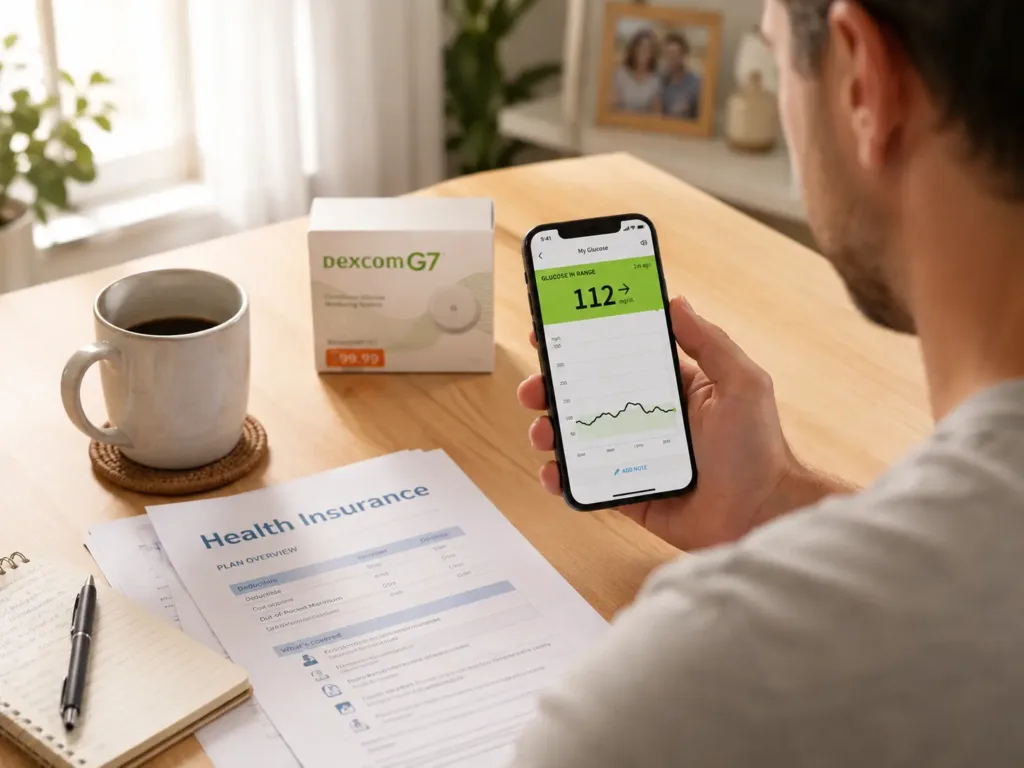
Cost is one of the biggest factors for most buyers, and prices can vary depending on pharmacy, location, and available discounts.
Here is a realistic breakdown for 2026 based on typical U.S. cash prices and common coverage patterns.
- Dexcom G7:
- Without insurance, a 30‑day supply of Dexcom G7 sensors generally costs around 300–400 USD per month, depending on the pharmacy and pack size.
- With private insurance or Medicare Part B coverage, out‑of‑pocket costs can drop significantly because many plans cover a large portion of the sensor cost and Dexcom offers savings programs and coupons for eligible users.
- FreeStyle Libre 3:
- FreeStyle Libre 3 is typically more affordable than Dexcom G7, with many users paying roughly 100–150 USD per month without insurance.
- When covered by commercial insurance or government programs, the effective monthly cost can be much lower, making Libre 3 one of the most budget‑friendly real‑time CGM options.
- Medtronic Guardian 4:
- The Medtronic Guardian 4 system is usually priced in a similar range to Dexcom, with total monthly costs commonly around 300–400 USD without insurance once sensor packs and required components are added up.
- People using Medtronic pumps often rely on private insurance or government coverage to keep monthly out‑of‑pocket costs manageable.
- Stelo by Dexcom:
- Stelo is Dexcom’s over‑the‑counter CGM designed for people who do not use insulin.
- It is priced at about 99 USD per month for two 15‑day sensors (a full 30‑day supply), and it does not require insurance or a prescription.
- This straightforward pricing makes it one of the easiest CGM options to budget for.
If you have insurance, it is important to check whether your plan covers CGMs under durable medical equipment (DME) or under pharmacy benefits, because the coverage path can change your co‑pay and where you fill the prescription.
Medicare Part B covers CGMs for eligible patients when criteria are met, usually paying around 80% of the approved amount after the deductible, while the patient covers the remaining coinsurance. Many manufacturers also offer patient assistance programs, savings cards, or trial offers to help reduce out‑of‑pocket expenses for those who qualify.
How to Choose the Right CGM for Your Needs
With so many options available, the right choice comes down to your specific health situation, lifestyle, and budget. Here is a simple way to think about it:
- If you have Type 1 diabetes and depend on insulin dosing, prioritize accuracy and real-time alerts. The Dexcom G7 is widely considered the gold standard for this use case.
- If you have Type 2 diabetes and want to understand your glucose patterns without a large investment, the FreeStyle Libre 3 or Stelo are excellent starting points.
- If you use a Medtronic insulin pump, the Guardian 4 offers the tightest integration and makes automated insulin delivery possible.
- If you have prediabetes or are monitoring for wellness reasons, Stelo is the easiest entry point because it requires no prescription and no doctor visit.
- If cost is your biggest concern, look at the FreeStyle Libre 2 or Stelo and explore manufacturer discount programs before making a decision.
Tips for Getting the Most Out of Your CGM
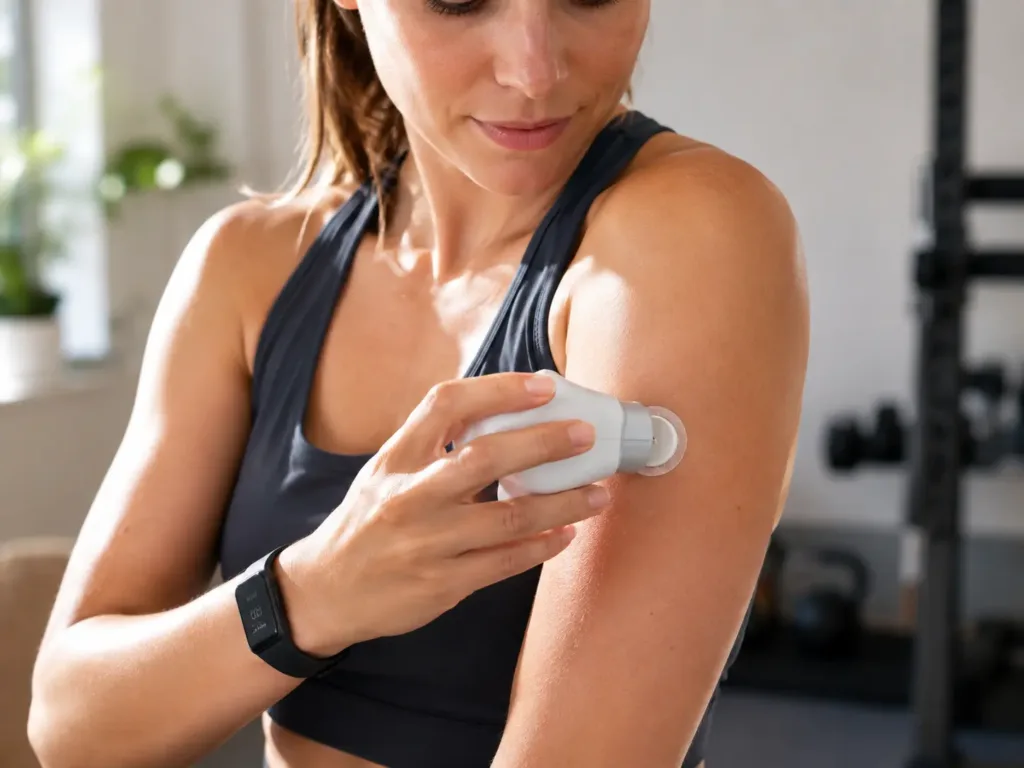
Buying the right device is only part of the equation. How you use it matters just as much.
- Apply the sensor correctly. Follow the instructions carefully. Poor placement or air bubbles under the sensor can lead to inaccurate readings. The upper arm is the most common and recommended placement site.
- Keep the app updated. CGM apps receive regular updates that fix bugs and improve connectivity. An outdated app can cause missed readings or sync failures.
- Read the trend arrows, not just the number. A glucose reading of 110 mg/dL with a rapidly falling arrow is very different from 110 with a steady arrow. Trend data is one of the most valuable things a CGM offers.
- Cross-check with a finger stick when making critical decisions. Before adjusting insulin based on a CGM reading, especially if the reading seems unusual or you feel symptoms that do not match the number, confirm with a traditional glucometer.
- Use the data with your doctor. Download your CGM reports before appointments. Most devices generate a summary report called the Ambulatory Glucose Profile (AGP), which gives your care team a detailed picture of your glucose patterns.
Final Verdict — Which CGM Should You Buy?
Here is the bottom line for 2026:
- Best overall accuracy and alerts: Dexcom G7
- Best for beginners and affordability: FreeStyle Libre 3
- Best for insulin pump users: Medtronic Guardian 4
- Best OTC option without a prescription: Stelo by Dexcom
No single CGM is perfect for everyone. The best device is the one that aligns with your health goals, fits your daily routine (including how often you want alerts and how comfortable you are wearing a sensor), and stays within your budget.
If you are unsure which system to choose, talk with your doctor or diabetes care specialist before purchasing; many insurance plans require a prescription and sometimes a letter of medical necessity, so starting that conversation early can save both time and money.
Ready to take control of your blood sugar around the clock? Start by deciding which category above describes you best, then check your insurance coverage or visit your local pharmacy or manufacturer websites to compare current prices, discounts, and availability in your area.