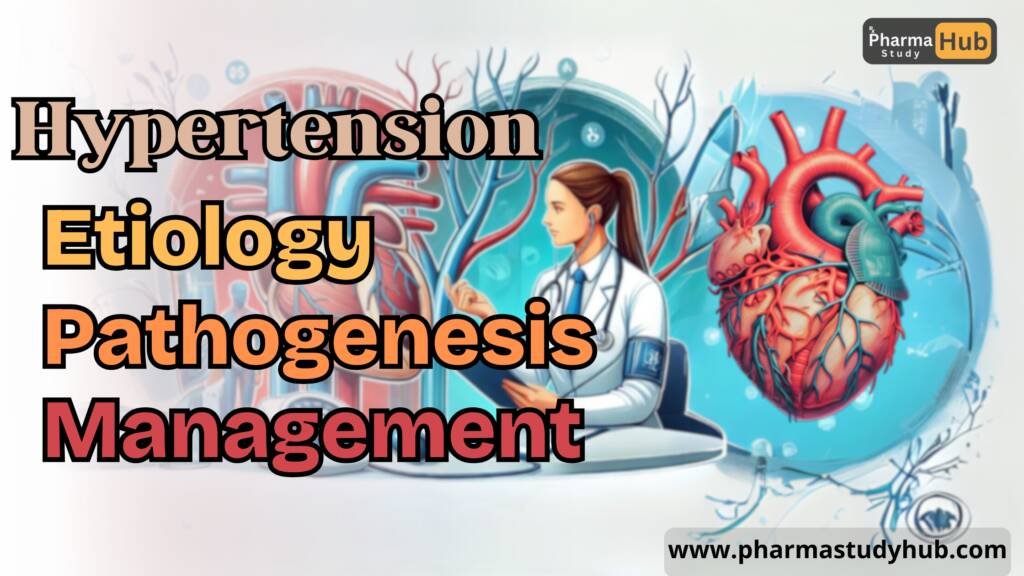
What is Hypertension?
Think of your blood vessels like a garden hose. When water flows through it at the right pressure, everything works just fine. But if the pressure gets too high, the hose starts to strain — and over time, it can crack or burst. That’s essentially what happens in your body when you have hypertension.
Hypertension, commonly known as high blood pressure, is a chronic condition where the force of blood pushing against your artery walls stays consistently too high. Your heart has to work harder than it should, and over time, this extra strain can lead to serious health problems like heart attack, stroke, and kidney disease.
The tricky part? Most people with hypertension don’t even feel sick. There are often no obvious symptoms — which is exactly why it’s been called the “Silent Killer.”
Blood pressure is measured in millimeters of mercury (mmHg) and is written as two numbers, like 120/80 mmHg. Here’s what those two numbers actually mean:
Systolic Pressure (the top number) — This is the pressure in your arteries when your heart beats and pumps blood out.
Diastolic Pressure (the bottom number) — This is the pressure between heartbeats, when your heart is at rest and refilling.
So when a doctor says your blood pressure is “120 over 80”, the 120 is the pressure during a heartbeat, and 80 is the pressure at rest.
Classification of Hypertension
Hypertension is classified into the following types:
- Primary (Essential) Hypertension: It is the most common type of hypertension, the cause is unknown in 90 to 95% cases. It develops gradually over the time due to the lifestyle or genetic factors.
- Secondary Hypertension: It is caused by an underlying health conditions like kidney disease, hormonal disorder or certain medications.
Grades of Hypertension
| Grades | Systolic & Diastolic Blood Pressure |
|---|---|
Normal |
120-129 / 80-84 mmHg |
Prehypertension |
130-139 / 85-89 mmHg |
Grade I Hypertension |
140-159 / 90-99 mmHg |
Grade II Hypertension |
160-179 / 100-109 mmHg |
Grade III Hypertension |
≥ 180 / ≥ 110 mmHg |
Isolated Systolic Hypertension |
≥ 140 / < 90 mmHg |
Hypertensive Urgency |
> 180 / > 110 mmHg |
Causes of Hypertension
What Causes Hypertension?
Here’s something surprising — in most cases, doctors can’t point to a single definitive cause of high blood pressure. It usually develops slowly over time, driven by a mix of genetics, habits, and underlying health conditions. Let’s break down each one.
1. Genetics & Family History
Your genes play a bigger role than most people realize. If one or both of your parents had high blood pressure, your risk of developing it is significantly higher. Certain inherited traits affect how your kidneys handle sodium, how reactive your blood vessels are, and how your nervous system regulates circulation — all of which directly influence blood pressure levels.
You can’t rewrite your DNA — but knowing your family history gives you a head start on prevention.
2. Poor Lifestyle Choices
This is the most common — and most preventable — cause. A diet loaded with salt, processed foods, and saturated fats gradually damages blood vessels and raises pressure over time. Lack of physical activity weakens the heart and promotes weight gain. Add in smoking, heavy alcohol use, and irregular sleep, and you have a perfect recipe for hypertension.
The encouraging part? This category is entirely within your control.
3. Hormonal Imbalances
Hormones are powerful regulators of blood pressure. Conditions like primary aldosteronism (excess aldosterone), Cushing’s syndrome (excess cortisol), and hyperthyroidism can cause the body to retain abnormal amounts of sodium and fluid — directly raising blood pressure. This is a leading cause of secondary hypertension, where an underlying condition is driving the high BP.
4. Kidney Disease
The kidneys are your body’s master blood pressure regulators. They control how much fluid stays in circulation and how much gets excreted. When kidneys are damaged — due to diabetes, infection, or chronic kidney disease — they lose that regulatory ability. Fluid builds up, blood volume increases, and blood pressure rises. What makes this tricky is that hypertension itself also damages the kidneys over time, creating a dangerous cycle.
5. Vascular (Blood Vessel) Changes
Healthy arteries are flexible — they expand and contract with each heartbeat, cushioning the pressure. As we age, or due to factors like high cholesterol and smoking, arteries can become stiff and narrowed (a process called arteriosclerosis). Stiffer vessels mean more resistance, which means the heart has to push harder. The result? Higher blood pressure.
6. Chronic Stress & Anxiety
Stress isn’t just a mental health issue — it has real, measurable effects on your cardiovascular system. When you’re stressed, your body floods your bloodstream with adrenaline and cortisol, which raise your heart rate and constrict blood vessels. Occasional stress is normal. But when stress becomes constant — due to work pressure, financial worries, poor sleep, or anxiety disorders — those repeated spikes can eventually lead to persistently high blood pressure.
How Does Hypertension Develop? (Pathogenesis)
Knowing what causes hypertension is one thing — understanding how it actually develops inside the body is another. This is where the real pharmacology begins.
Blood pressure is determined by two core factors:
Cardiac Output (CO) — how much blood the heart pumps per minute
Peripheral Resistance (PR) — how much resistance blood faces flowing through vessels
The simple equation: BP = CO × PR
When either one — or both — go up and stay up, hypertension develops. Here’s how each mechanism plays out:
1. Increased Cardiac Output
When the heart pumps out more blood per minute than the body needs, arterial pressure rises. This can be triggered by fluid overload, an overactive sympathetic nervous system, or conditions that speed up heart rate chronically. Think of it like turning up the pressure on a pump — the more output, the higher the line pressure.
2. Increased Peripheral Resistance
Peripheral resistance is the friction blood encounters as it flows through smaller arteries and arterioles. When these vessels become narrowed, constricted, or stiffened, resistance increases — and so does pressure. This is the most dominant mechanism in long-standing hypertension, and it’s why vasodilator drugs (like CCBs and ACEIs) are so effective.
3. RAAS Overactivation (Renin–Angiotensin–Aldosterone System)
This is arguably the most important mechanism in hypertension — and the primary target of many antihypertensive drugs. Here’s how it unfolds:
The kidneys detect low blood flow or low sodium → release Renin
Renin converts Angiotensinogen → Angiotensin I
ACE (Angiotensin Converting Enzyme) converts Angiotensin I → Angiotensin II
Angiotensin II does two things: constricts blood vessels + stimulates release of Aldosterone
Aldosterone causes kidneys to retain sodium and water → increased blood volume → higher BP
When RAAS is overactive without a real need, this entire chain stays switched “on” — keeping blood pressure elevated around the clock.
4. Sympathetic Nervous System (SNS) Overactivity
The SNS is your body’s emergency response system. It’s designed for short bursts of “fight or flight.” But in many hypertensive patients — especially those with obesity, chronic stress, or sleep apnea — the SNS is chronically overactivated. It continuously releases norepinephrine, which raises heart rate, increases cardiac output, and constricts blood vessels all at once. Beta Blockers work specifically by blocking this pathway.
5. Endothelial Dysfunction
The endothelium is the single-cell-thick lining inside every blood vessel — and it’s far more than just a passive barrier. In healthy vessels, endothelial cells produce nitric oxide (NO), which keeps vessels relaxed, flexible, and free from inflammation.
In hypertension, oxidative stress and chronic inflammation damage the endothelium. Nitric oxide production drops. Without it, vessels stay constricted, inflammation builds up, and arterial walls become progressively stiffer. This dysfunction both results from high blood pressure and contributes to making it worse — a true vicious cycle.
Management of Hypertension
Management of Hypertension not only aims to reduce blood pressure but also reduce the Cardiovascular risk. Management target is 150/90 mmHg in elderly persons and 140/90 mmHg in all others.
Non - Pharmacological Management of Hypertension
Managing Hypertension without medication involves lifestyle changes that help control blood pressure naturally.
- Dietary Modification:
- Reduce salt intake (< 5g / day)
- DASH (Dietary Approaches to Stop Hypertension): Eat more fruits, vegetables, whole grains, low fat dairy product.
- Less Processed foods, avoid packaged food.
- Regular Physical Activity:
- 30 – 45 min moderate exercise e.g. walking, cycling, swimming. At least 4-5 days in a week.
- Weight management: maintain a healthy BMI(Body Mass Index).
- Reduce stress: Yoga, Meditation, Deep Breathing.
- Limiting Alcohol and Avoid Smoking.
- Take proper Sleep at least 7-8 hours.
- Increase Potassium Intake: Eat Banana, Oranges, Spinach, Potatoes, it will balance the sodium level.
DISCLAIMER
The information provided in this blog is for educational purposes only and should not be considered medical advice. Always consult a qualified healthcare professional before starting, stopping, or changing any medication for hypertension. The use of antihypertensive drugs should be based on a doctor’s prescription, considering individual health conditions and medical history.
Pharmacological Management of Hypertension
Pharmacological management of Hypertension includes:
- Angiotensin Converting Enzyme Inhibitors (ACEI) e.g. Enalapril 2.5, 5, 10, 20 mg tab OD/BD
- Angiotensin II Receptor Blockers (ARBs) e.g. Losartan 25 – 50 mg tab OD.
(Do not combine ACEI with ARBs) - Beta Blockers (Bb) e.g. Atenolol 50-100 mg tab OD.
- Calcium Channel Blockers (CCBs) e.g. Amlodipine 2.5 – 5 mg tab OD.
- Thiazide Diuretics(TD) e.g. Hydrochlorothiazide 12.5 – 25 mg OD.
- Mineral Corticoid Receptor Antagonist (MRA) e.g. Spironolactone.
Hypertension during pregnancy can be treated with the following medicines:
- Methyldopa
- Nifedipine
- Labetalol
- Hydralazine
- Beta Blockers
(Avoid ACEI, ARBs, and Aldosterone Antagonist in Pregnancy)
Management of Grade I Hypertension
Patient should follow lifestyle modification in grade I Hypertension, if it is not controlled after 3-4 months, and patient have risk factors like age > 50, smoking, obesity, dyslipidaemia, impaired fasting glucose, family history or early coronary artery disease, then drug therapy should be started with
- ACEI (Angiotensin Converting Enzyme Inhibitor)
- CCB (Calcium Channel Blockers)
- TD (Thiazide Diuretics)
If result is not adequate in next 3-4 weeks second drug should be added
- CCB + ACEI or,
- ACEI + TD or,
- CCB + TD.
If still does not show any improvement then lastly add third drug
- ACEI + CCB + TD.
Management of Grade II Hypertension
Drug therapy should be started initially when Grade II Hypertension is detected and therapy should be started with:
- ACEI or,
- CCB or,
- TD
If not improvement after 3-4 weeks should be added second drug
- CCB + ACEI or,
- CCB + ARBs
- CCB + TD or,
- ACEI + TD
If still no improvement add third drug to the therapy:
- ACEI + CCB + TD
Management of Grade III Hypertension
Initially starts with the two drugs
- ACEI + CCB or,
- CCB + TD or,
- ACEI + TD
if the therapy does not shows any adequate result in next 2-4 weeks, add third drug to the therapy
- ACEI + CCB + TD
Hypertension with Clinical Condition
- Coronary artery disease: Bb + ACEI, CCB (CCB could be added if required to achieve target BP).
- Congestive Heart Failure (CHF): TD + ACEI + Bb, MRA (Mineral Corticoid receptor antagonist).
- Diabetes Mellitus: ACEI or CCB or TD.
- Chronic Kidney Disease: ACEI or CCB or TD.
Contraindications
- Amlodipine (CCB): Cardiogenic shock, unstable angina, significant aortic stenosis, worsening angina, and increased risk of MI.
- Enalapril (ACEI): Should not use any ACEI in pregnancy, Bilateral renal artery stenosis.
- Hydrochlorothiazide: Severe hypokalaemia, hyponatremia, hypercalcemia.
Note: Do not combine ACEI + ARBs and do not combine Bb and Diuretics, they can increase risk of diabetes mellitus.