A well-structured diabetic diet plan focuses on non-starchy vegetables, smart carbohydrates, lean proteins, and heart-healthy fats—while limiting added sugars and refined grains. Evidence-backed approaches like the Plate Method, Mediterranean-style eating, and the DASH pattern all support blood sugar control, reduced A1C, and a lower risk of long-term complications.
More than 40 million Americans—roughly 1 in 8—are living with diabetes, and approximately 90–95% of those cases are type 2 (CDC, 2024). For most of them, food isn’t just fuel. It’s medicine.
But knowing you should “eat better” and knowing how to eat better are two very different things. The nutrition advice out there ranges from useful to contradictory to genuinely overwhelming. Low-carb? Mediterranean? Plate Method? Cut sugar? Add fiber? The options multiply fast.
This guide cuts through the noise. Below are 12 expert-backed tips for building a diabetic diet plan that actually works—grounded in guidance from the CDC, the American Diabetes Association (ADA), and Mayo Clinic. Whether you’re newly diagnosed or refining an existing routine, these strategies offer a practical, evidence-based place to begin.
One important note before you dive in: always work with your healthcare provider or a registered dietitian to tailor any eating plan to your personal health needs, medications, and goals. No single approach works for everyone.
Key Takeaways
Fill half your plate with non-starchy vegetables at every meal.
Choose whole grains over refined carbohydrates.
Pair carbohydrates with protein, healthy fats, or fiber.
Include lean protein sources such as fish, chicken, tofu, and legumes.
Follow a consistent meal schedule to help stabilize blood sugar levels.
Consider evidence-based eating patterns such as the Mediterranean Diet, DASH Diet, or a low-carbohydrate approach.
Work with a registered dietitian to create a personalized diabetes meal plan.
Medically Reviewed Information
Last Updated: July 2026
Content Type: Evidence-Based Educational Guide
Sources Referenced:
CDC (Centers for Disease Control and Prevention)
American Diabetes Association (ADA)
Mayo Clinic
National Institutes of Health (NIH)
PLOS Medicine
Diabetes Spectrum
This article is intended for educational purposes only and should not replace professional medical advice. Always consult your healthcare provider before making significant dietary changes.
Tip 1: Use the Plate Method to Take the Guesswork Out of Meals
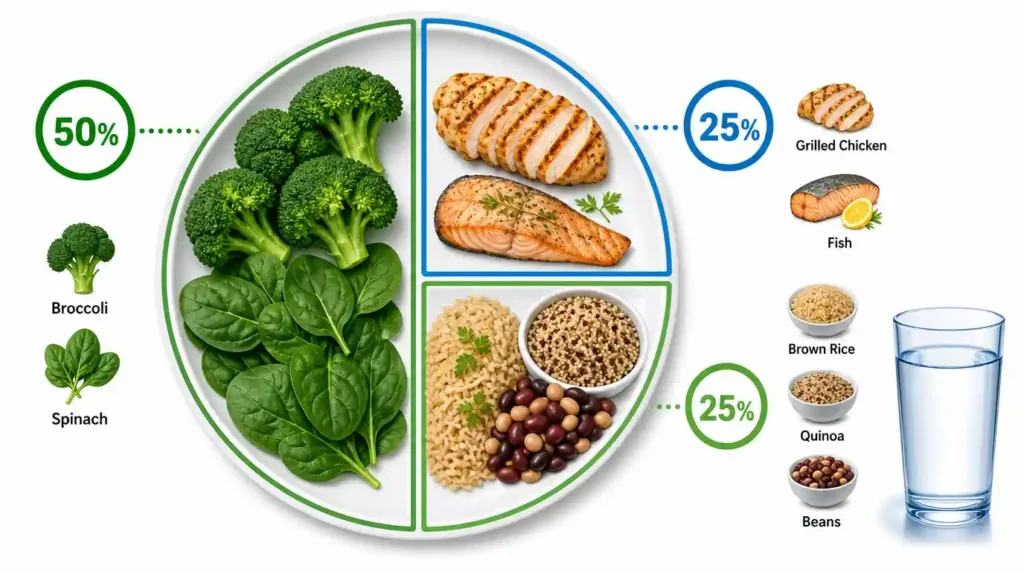
The Diabetes Plate Method makes meal planning simple and balanced.
The simplest way to build a balanced diabetes-friendly meal? Use your plate as a guide.
The Plate Method, recommended by both the CDC and the American Diabetes Association, works like this:
start with a standard 9-inch dinner plate, then divide it into three sections:
Half the plate: Non-starchy vegetables (broccoli, spinach, salad greens, green beans, tomatoes)
One quarter: Lean protein (chicken, fish, tofu, eggs, beans)
One quarter: Carbohydrate-rich foods (brown rice, whole grains, starchy vegetables)
Add a glass of water or unsweetened iced tea, and you’ve got a structured, blood-sugar-friendly meal without tracking a single calorie or downloading a diabetic diet meal plan app.
Quick tip: Pair your carbs with protein, fat, or fiber at every meal. This combination slows how quickly carbohydrates raise blood sugar.
Tip 2: Load Up on Non-Starchy Vegetables
Non-starchy vegetables are among the best foods for people managing diabetes. They’re high in vitamins, minerals, and fiber—and low in carbohydrates and calories—which means they have minimal impact on blood glucose, even in generous portions.
Great choices include:
Leafy greens (spinach, kale, arugula)
Broccoli and cauliflower
Bell peppers and zucchini
Cucumbers, tomatoes, and mushrooms
Green beans and asparagus
The goal: fill half your plate with these at every meal. They add volume and nutrients without driving blood sugar spikes.
Tip 3: How Does Counting Carbohydrates Help Manage Blood Sugar Levels?
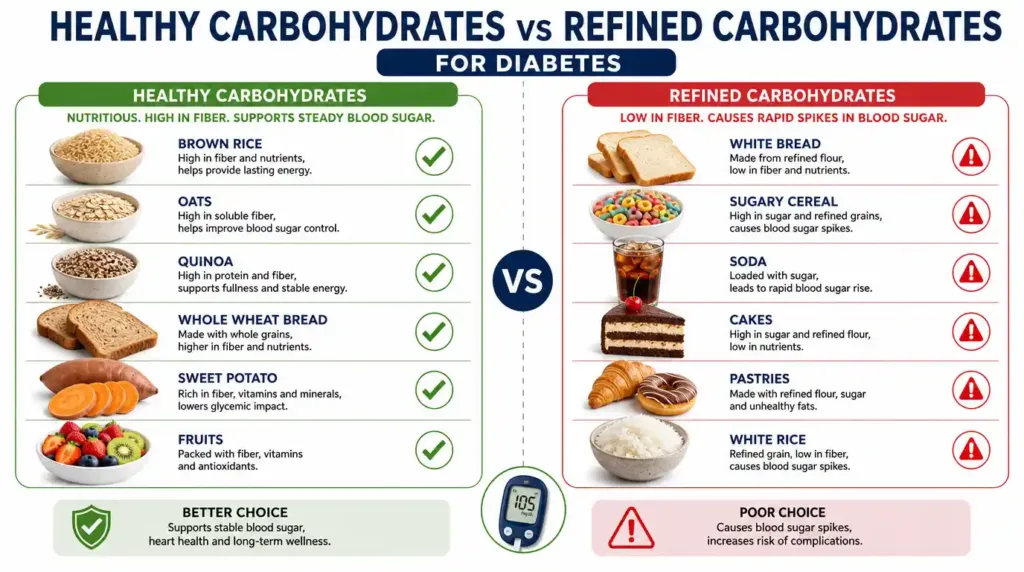
Choose whole grains instead of refined carbohydrates for better blood sugar control.
Carbohydrates have the greatest direct impact on blood sugar of any macronutrient. When carbs are digested, they break down into glucose and enter the bloodstream—which is why both the type and the quantity of carbs you eat matter so much.
Carb counting involves tracking the grams of carbohydrates per meal. A registered dietitian can help you determine your personal carb target, which varies based on weight, activity level, and medications. Common starting ranges are a 1,200 calorie diabetic diet plan for those managing weight more aggressively, or a meal plan for a 1,800-calorie diet for diabetes for those with higher activity levels or different metabolic needs.
Focus on quality carbohydrates, such as:
Fruits and vegetables
Whole grains (oats, quinoa, brown rice, whole-wheat bread)
Legumes (lentils, chickpeas, black beans)
Low-fat dairy
Limit or avoid:
White bread, white rice, and refined pasta
Sugary drinks and fruit juices
Baked goods made with refined flour
The CDC also notes that eating carbs alongside protein, fat, or fiber slows glucose absorption—a simple pairing that makes a measurable difference in post-meal blood sugar readings.
Diabetes-Friendly Carbohydrate Swaps
Instead of
White Rice
White Bread
Sugary Breakfast Cereals
Regular Pasta
Fruit Juice
Sweetened Yogurt
Potato Chips
Soda
Choose
Brown Rice
Whole Wheat Bread
Oatmeal
Whole Grain Pasta
Whole Fruite
Plain Greek Yogurt
Roasted Chickpeas
Water or Unsweetened Tea
Making even one or two of these substitutions can significantly improve blood sugar control over time.
Tip 4: Make Fiber Your Secret Weapon
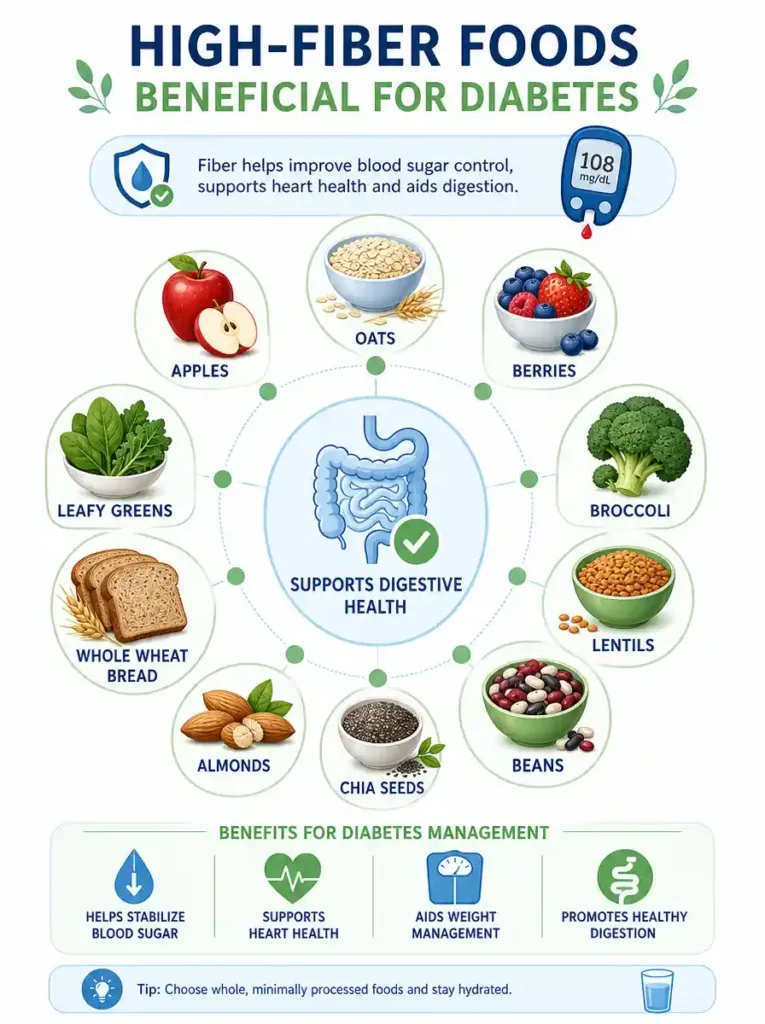
Fiber-rich foods can help improve blood sugar control.
Fiber is one of the most underutilized tools in diabetes management. It slows digestion, moderates how quickly blood sugar rises after a meal, and supports heart health—a major concern for people with diabetes.
Research published in PLOS Medicine found that increasing dietary fiber intake is associated with improvements in HbA1c levels and fasting blood glucose in people with diabetes. The American Diabetes Association recommends aiming for approximately 25–38 grams of fiber per day, depending on age and sex.
High-fiber foods to prioritize:
Vegetables and whole fruits (eating whole fruit rather than drinking juice maximizes the fiber benefit)
Nuts and seeds
Legumes (beans, lentils, peas)
Whole grains
A practical shortcut: if it comes in a package, check the label. Aim for at least 3 grams of fiber per serving.
Top High-Fiber Foods for Diabetes
The following foods provide fiber while supporting healthy blood glucose levels:
Food
Approximate Fiber
Lentils (1 cup cooked)
15 g
Black Beans (1 cup cooked)
15 g
Chia Seeds (2 tbsp)
10 g
Pear (medium)
6 g
Apple (medium)
4–5 g
Broccoli (1 cup cooked)
5 g
Oatmeal (1 cup cooked)
4 g
Aim to increase fiber gradually and drink adequate water to support digestion.
Tip 5: How Should You Choose Protein as Part of a Diabetic Diet Plan?
Protein helps stabilize blood sugar by slowing carbohydrate absorption and supporting satiety. The key is choosing lean sources that don’t come loaded with saturated fat.
Lean protein choices include:
Chicken and turkey (without skin)
Fish and shellfish
Eggs
Tofu and tempeh
Legumes (which also count as a carbohydrate—worth noting when carb-counting)
Low-fat dairy
For those following a vegetarian diabetic diet meal plan, tofu, tempeh, legumes, and low-fat dairy provide adequate protein without the cardiovascular risk that comes with high-fat animal proteins. Research published in Diabetes Spectrum (2017) confirmed that vegetarian diets can be effective tools for blood glucose management in type 2 diabetes.
Limit high-fat animal proteins like red meat, processed meats (sausage, bacon, hot dogs), and full-fat cheese. These are high in saturated fat, which raises LDL cholesterol and increases cardiovascular risk—a meaningful concern given that diabetes already raises the risk of heart disease and stroke (Mayo Clinic).
Tip 6: Include Heart-Healthy Fats in Moderation
Not all fat is created equal—and for people with diabetes, choosing the right type matters considerably.
Monounsaturated and polyunsaturated fats can help lower LDL cholesterol and reduce cardiovascular risk. Sources include:
Avocados
Nuts (almonds, walnuts, pistachios)
Olive, canola, and peanut oils
Saturated and trans fats should be minimized. These are found in butter, tropical oils (coconut, palm kernel), fried foods, processed snacks, and commercially baked goods.
One important caveat: even healthy fats are calorie-dense. Moderation still matters, particularly for anyone managing weight alongside diabetes.
Tip 7: What Are the Benefits of Eating Fatty Fish for People With Diabetes?
Mayo Clinic recommends eating heart-healthy fish at least twice a week as part of a diabetic diet plan. Fatty fish—including salmon, mackerel, sardines, and tuna—are rich in omega-3 fatty acids, which support cardiovascular health and help reduce inflammation.
Cardiovascular disease is the leading cause of death among people with type 2 diabetes. Incorporating omega-3-rich fish regularly is a straightforward, evidence-supported step toward reducing that risk.
Preparation matters: opt for baked, grilled, or broiled fish rather than fried.
Note: If you are pregnant, planning to become pregnant, or breastfeeding, avoid fish high in mercury (shark, swordfish, king mackerel, tilefish). Consult your healthcare provider for guidance.
Tip 8: Cut Back on Added Sugars and Refined Grains
Added sugars and refined grains cause rapid spikes in blood glucose—exactly what a diabetic diet plan aims to prevent.
The CDC recommends a good meal plan should include:
Fewer added sugars and refined grains (white bread, white rice, regular pasta, pastries, sweetened cereals)
Fewer highly processed foods
More whole foods in their natural state
This doesn’t mean you can never have dessert. The American Diabetes Association notes that people with diabetes can enjoy sweets occasionally—the key is portion size, timing, and how the food fits into the overall day’s eating. Swapping refined grains for whole-grain alternatives is a small, sustainable change with a measurable payoff for blood sugar control.
Tip 9: What Is the Mediterranean-Style Meal Pattern and How Does It Help With Diabetes?
The Mediterranean diet supports heart health and diabetes management.
The Mediterranean-style meal pattern is one of seven evidence-based eating patterns identified by the ADA in its Nutrition Consensus Report. Research published in PLOS Medicine and PLOS ONE (National Institutes of Health, 2020) found that adherence to the Mediterranean diet is associated with lower HbA1c levels and a better cardiovascular risk profile in people with diabetes.
This pattern is well-suited to reducing A1C, lowering triglycerides, and decreasing the risk of cardiovascular events. It also adapts naturally to a vegetarian diabetic diet meal plan by leaning more heavily on legumes, whole grains, and plant-based proteins.
Tip 10: Should People With Diabetes Consider a Low-Carbohydrate Meal Pattern?
Low-carbohydrate eating is another ADA-endorsed meal pattern with strong evidence for blood sugar management. The ADA defines a low-carbohydrate diet as one where carbohydrates make up 26–45% of total daily calories.
This approach is particularly effective for people looking to:
Reduce A1C
Lose weight
Lower blood pressure
Raise HDL (good) cholesterol
Reduce triglycerides
A very low-carbohydrate pattern (less than 26% of calories from carbs, or roughly 20–50 g of non-fiber carbohydrates per day) produces similar benefits, but requires closer medical monitoring and is not appropriate for everyone.
Choose low-carbohydrate if: blood sugar control and weight management are primary goals, and you can sustain the pattern long-term.
This approach may not be ideal if: you have kidney disease (for whom a diabetic renal diet meal plan requires a different set of protein and mineral adjustments), take certain diabetes medications, or find very restrictive eating patterns difficult to maintain. Always consult your healthcare provider before making major dietary changes.
Tip 11: How Does the DASH Meal Pattern Benefit People With Diabetes?
The Dietary Approaches to Stop Hypertension (DASH) meal pattern was originally developed to lower blood pressure—but it’s also recognized by the ADA as beneficial for people with diabetes or at elevated risk of developing it.
DASH emphasizes:
Vegetables and fruits
Whole grains
Low-fat dairy
Poultry, fish, and nuts
Reduced sodium, saturated fat, red meat, and sugar-sweetened beverages
Choose DASH if: managing blood pressure is a priority alongside blood sugar control. The combination of high fiber, low sodium, and lean protein makes DASH particularly effective for people managing both hypertension and diabetes—a pairing that’s more common than most people realize.
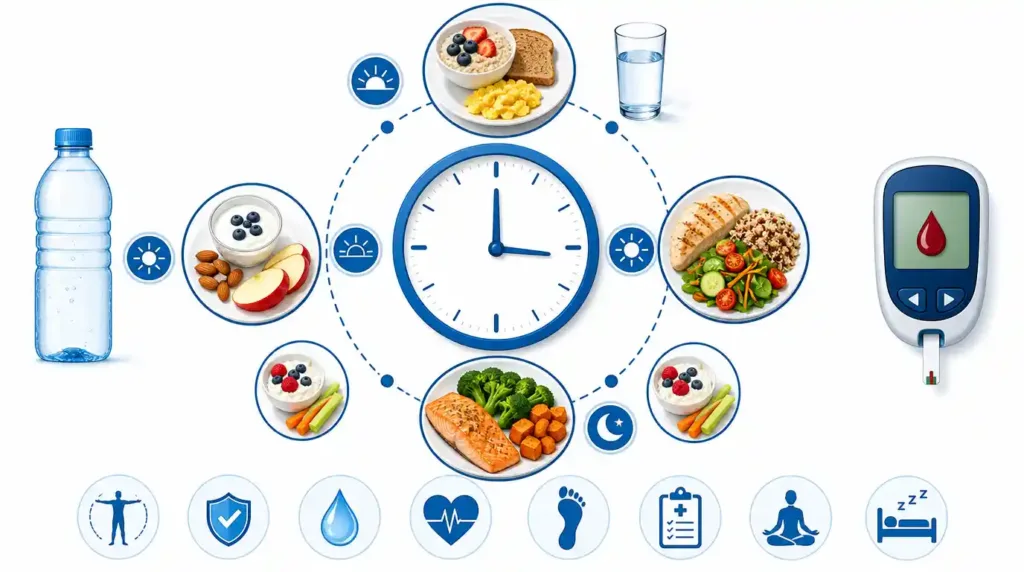
Tip 12: Why Does Consistent Meal Timing Matter for Blood Sugar Control?
Eating meals at regular times can help stabilize blood sugar levels.
What you eat matters. So does when you eat.
Eating at regular, consistent times helps your body use insulin more effectively—whether that insulin is produced naturally or taken as medication. Skipping meals or eating at irregular intervals can cause blood sugar to swing in both directions, increasing the risk of hyperglycemia (high blood sugar) and hypoglycemia (low blood sugar) alike.
Practical strategies for consistent meal timing:
Eat three balanced meals per day at roughly the same times
Space meals 4–6 hours apart
If you snack, plan it rather than graze reactively—and count carbs in your daily total
Avoid skipping breakfast, which can cause blood sugar to dip and lead to overeating later in the day
If your schedule makes consistency difficult, a registered dietitian or a diabetic diet meal plan app—such as mySugr, which allows users to log blood sugar, meals, and activity—can help you build a flexible framework that fits your lifestyle.
One-Day Diabetes-Friendly Meal Plan
The following sample meal plan demonstrates how many of the principles discussed in this article can work together in a practical daily routine.
Breakfast
Vegetable omelet with spinach and tomatoes
One slice whole-grain toast
Unsweetened tea or coffee
Mid-Morning Snack
Handful of almonds
Small apple
Lunch
Grilled chicken breast
Brown rice
Mixed vegetable salad with olive oil dressing
Afternoon Snack
Plain Greek yogurt
Chia seeds
Dinner
Baked salmon
Steamed broccoli
Quinoa
Evening Option (If Needed)
Small serving of cottage cheese
Cucumber slices
This meal plan provides a balance of carbohydrates, protein, healthy fats, and fiber while supporting steady blood sugar levels.
Build Your Diabetic Diet Plan One Step at a Time
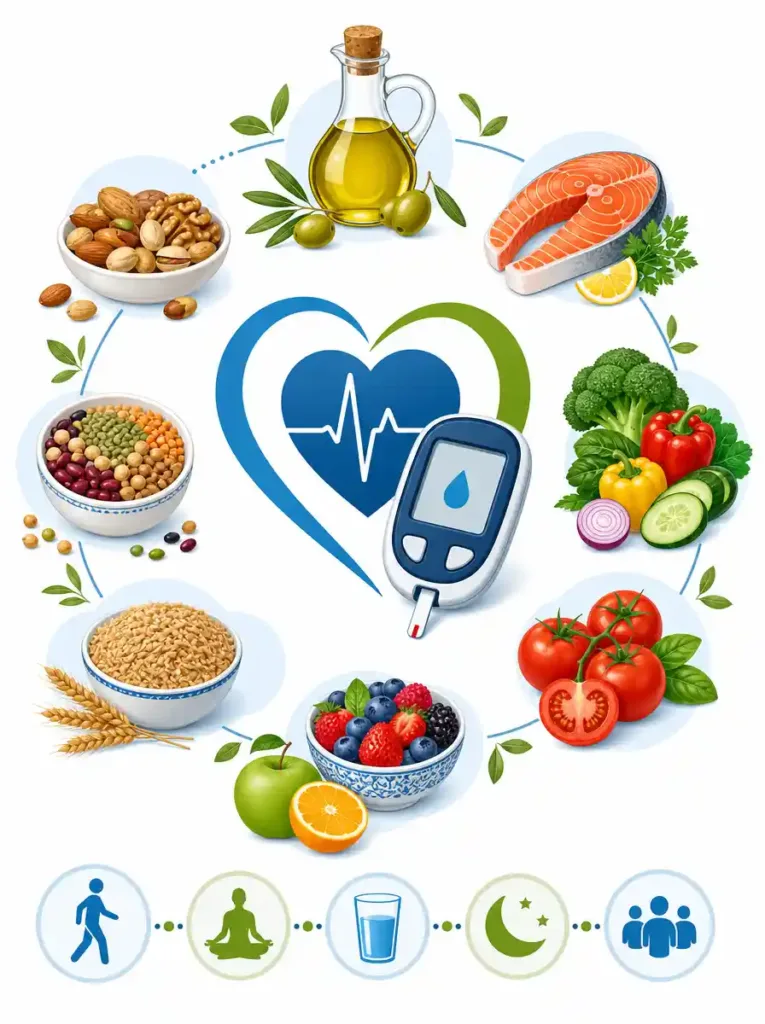
Healthy eating and daily habits play a key role in diabetes management.
No diabetic diet plan works instantly, and no single approach suits everyone. The goal isn’t perfection. It’s consistency.
Small, sustainable changes to what and when you eat add up over time, supporting better blood sugar control, reduced A1C, and a lower risk of long-term complications. Structured programs—like a free 7-day diet plan for diabetic patients from the CDC or ADA, a my diabetes diet 28-day plan, or a more personalized approach through a registered dietitian—all offer different starting points. Some people respond well to structured plans like a Weight Watchers diabetic diet plan, which combines portion guidance with community accountability.
A few concrete next steps:
Ask your doctor for a referral to a registered dietitian or a Diabetes Self-Management Education and Support (DSMES) program
Try the Plate Method at your next meal—no special tools required
Swap one refined grain (white bread, white rice) for a whole-grain alternative this week
Add a serving of non-starchy vegetables to one meal per day
Download a printable diabetic diet meal plan PDF from the ADA or CDC to use as a daily reference
These aren’t dramatic changes. They’re places to start—and starting is the thing.
Common Mistakes That Can Make Blood Sugar Harder to Control
Even when trying to eat healthy, some habits can make diabetes management more difficult.
Skipping Meals
Skipping meals may increase the risk of blood sugar fluctuations and overeating later in the day.
Drinking Calories
Sugary beverages, sweetened coffee drinks, and fruit juices can raise blood glucose rapidly.
Underestimating Portion Sizes
Even healthy foods can affect blood sugar when consumed in excessive amounts.
Avoiding All Carbohydrates
Carbohydrates are not the enemy. Choosing high-quality carbohydrates and controlling portions is usually more effective than eliminating them entirely.
Ignoring Fiber Intake
Many adults consume less fiber than recommended, missing one of the most effective nutritional tools for blood sugar management.
Build Your Diabetic Diet Plan One Step at a Time
No diabetic diet plan works instantly, and no single approach suits everyone.
The goal is not perfection—it’s consistency.
Small improvements made consistently often produce better long-term results than dramatic short-term changes. Whether you choose the Plate Method, Mediterranean Diet, DASH Diet, or a low-carbohydrate approach, the best eating pattern is one that supports your health goals and can be maintained for years rather than weeks.
Start With One Change This Week
Choose one simple action:
Add a serving of non-starchy vegetables to your lunch or dinner.
Replace white rice with brown rice.
Drink water instead of sugary beverages.
Increase your daily fiber intake.
Follow the Plate Method for one meal each day.
Over time, these small habits can contribute to better blood sugar control, lower A1C levels, improved cardiovascular health, and a reduced risk of diabetes-related complications.
Helpful Resources for People Living With Diabetes
Consider exploring the following resources:
Diabetes Self-Management Education and Support (DSMES) programs
Registered Dietitian Nutritionists (RDNs)
Certified Diabetes Care and Education Specialists (CDCES)
Blood glucose tracking applications
Printable meal planning templates
Diabetes support groups and community programs
These resources can help transform dietary recommendations into sustainable daily habits.
Frequently Asked Questions
What is the best diabetic diet plan for people with type 2 diabetes?
There is no single best plan. The American Diabetes Association identifies seven evidence-based meal patterns, including Mediterranean-style, low-carbohydrate, DASH, and very low-fat eating. The most effective diabetic diet plan is one you can sustain long-term, aligned with your health goals, preferences, and lifestyle. Working with a registered dietitian is the most reliable way to identify the right fit.
What foods should people with diabetes avoid?
People with diabetes should limit or avoid added sugars, refined grains (white bread, white rice, regular pasta), trans fats, high-sodium processed foods, and sugar-sweetened beverages. These foods cause rapid blood sugar spikes and increase the risk of cardiovascular complications.
How many carbohydrates should a person with diabetes eat per day?
Carbohydrate needs vary by individual. The ADA defines a low-carbohydrate diet as 26–45% of total daily calories from carbs; a very low-carbohydrate diet falls under 26% (roughly 20–50 g of non-fiber carbs per day). Common structured plans range from a 1,200-calorie diabetic diet plan up to a meal plan for a 1,800-calorie diet for diabetes, depending on weight, activity level, and goals. A registered dietitian can help you find the right target.
Does meal timing affect blood sugar?
Yes. Eating at consistent times each day helps the body use insulin more efficiently and reduces blood sugar fluctuations. Skipping meals or eating irregularly can lead to both high and low blood sugar events. The CDC recommends planning regular, balanced meals spaced 4–6 hours apart.
Is the Mediterranean diet good for people with diabetes?
Yes. Research published in PLOS Medicine (2020) found that adherence to the Mediterranean diet is associated with lower HbA1c levels and better cardiovascular risk profiles in people with diabetes. The ADA includes it as one of seven evidence-based eating patterns for diabetes management.
Can people with diabetes eat fruit?
Yes, but portion size and fruit type matter. Whole fruits are preferable to juice, as fiber in whole fruit slows glucose absorption. Berries, apples, and citrus tend to have a lower glycemic impact than fruits like watermelon or dates. Fruit should be counted as part of your overall daily carbohydrate intake.
Is a low-carbohydrate diet safe for people with kidney disease?
Not without medical supervision. A standard low-carbohydrate plan is typically higher in protein, which can place additional strain on kidneys. People with kidney disease require a specialized diabetic renal diet meal plan that carefully controls protein, potassium, phosphorus, and sodium. Always consult a nephrologist or registered dietitian before adjusting your eating plan.
Do diabetic dogs need a special diet too?
Yes—diabetes affects pets as well as people. Dogs diagnosed with diabetes often benefit from a low-carbohydrate, high-protein diet to help reduce blood glucose fluctuations. Purina Pro Plan Veterinary Diets DM (Diabetes Management) is a veterinarian-recommended food formulated specifically for the nutritional management of diabetes in dogs, featuring low carbohydrates to help limit post-meal blood sugar spikes. If your dog has been diagnosed with diabetes, work with your veterinarian to establish an appropriate dietary and insulin plan.
Do I need to work with a dietitian to create a diabetes meal plan?
Working with a registered dietitian or a certified diabetes care and education specialist (CDCES) is strongly recommended. They can build a personalized plan based on your specific health needs, medications, food preferences, and goals. The CDC advises asking your doctor for a referral to a Diabetes Self-Management Education and Support (DSMES) program.
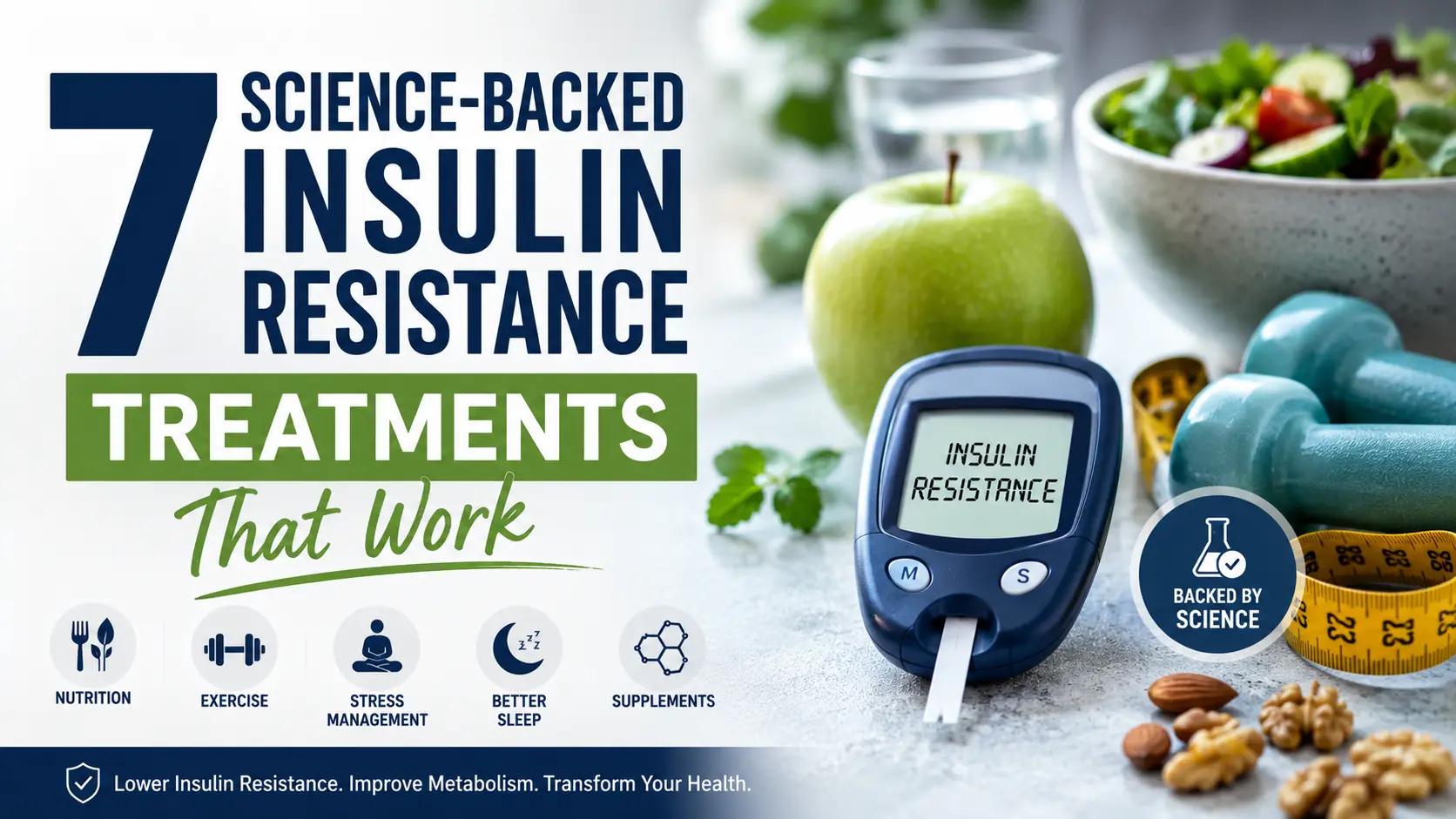
Insulin resistance is increasingly common in the United States, especially with rising rates of obesity, inactivity, and processed‑food diets. It means your body’s cells don’t respond well to insulin, so blood sugar stays higher than it should. The good news is that several science‑backed lifestyle and medical steps can help reverse it if you act early.
1. Lose excess body weight
Losing even a small amount of weight can improve insulin sensitivity. Research shows that losing about 5–10% of your body weight can help lower blood sugar, triglycerides, and blood pressure. For example, if you weigh 200 pounds, that’s about 10–20 pounds.
Focus onslow, steady weight loss through better food choices and movement, rather than extreme diets. In the US, brands like Weight Watchers (now WW) are widely used, while in India, apps such as HealthifyMe or S Health (Samsung) help track calories and activity.
2. Eat a high‑fiber, balanced diet
A diet rich in fiber, healthy fats, and lean protein improves insulin sensitivity more than one loaded with refined carbs and sugar. Aim to:
Fill half your plate with vegetables and some fruit.
Choose whole grains like oats, quinoa, or brown rice instead of white bread and white rice.
Include lean protein such as chicken, fish, eggs, or legumes.
Cut back on sugary drinks and highly processed snacks. In the US, many people still drink soda daily, while in India, sweetened drinks from brands like classic Coca-Cola or Sprite and packaged sweets are common sugar sources. Replacing those with water, herbal tea (like Tulsi), or unsweetened beverages is a simple first step.
3. Exercise regularly
Exercise is one of the most powerful treatments for insulin resistance. Both aerobic and strength training help muscles use glucose more efficiently. Even walking 30 minutes a day, most days of the week, can make a difference.
Aim for:
At least 150 minutes per week of moderate activity (like brisk walking, cycling, or swimming).
Two sessions of strength training (using weights, resistance bands, or body‑weight exercises like squats and push‑ups).
If you live in the US, tools like Fitbit, Apple Watch, or Garmin can help track steps and workouts. In India, brands like Noise, Boat, and Amazfit offer similar fitness trackers at different price points.
4. Improve sleep quality
Poor or short sleep can make insulin resistance worse. Studies show that regularly sleeping less than 6–7 hours per night can increase blood sugar and reduce insulin sensitivity. Shift work, late‑night screen time, and irregular schedules are common culprits.
To improve sleep:
Try to go to bed and wake up around the same time every day.
Reduce screen time at night and keep your bedroom dark, cool, and quiet.
Limit caffeine in the evening and avoid heavy meals close to bedtime.
5. Manage stress
Chronic stress raises stress hormones like cortisol, which can raise blood sugar and worsen insulin resistance. Common stressors include work pressure, money worries, and long commutes.
Simple stress‑reducing habits that help include:
Deep breathing or box breathing (inhale 4 seconds, hold 4, exhale 4, hold 4).
Mindfulness or short meditations using apps like Calm or Headspace in the US.
Yoga or guided breathing apps such as Rüpu or mental‑wellness‑focused features on Indian apps.
6. Consider prescribed treatment when needed
If lifestyle changes are not enough, doctors may recommend medication or medical support. Common options that have been studied for insulin resistance include:
Metformin, an oral medicine often used in both the US and India to improve insulin sensitivity.
Certain weight‑loss medications (like GLP‑1 drugs such as Ozempic or Wegovy in the US; some GLP‑1 analogues are also available in India, but branding and approval vary).
Other diabetes or metabolic medicines, depending on your blood work and risk factors.
Note: Always use medicines under a doctor’s supervision. Never start or stop any insulin‑resistance treatment on your own.
7. When to talk to a doctor
You should speak with a healthcare provider if you:
Have a waist size over about 35 inches (89 cm) for women or 40 inches (102 cm) for men.
Have a family history of type 2 diabetes plus weight gain or fatigue.
Notice frequent thirst, frequent urination, or unexplained tiredness.
A simple blood test can check fasting glucose, HbA1c, and sometimes insulin levels. In the US, you can request this at a primary care clinic or pharmacy lab; in India, similar tests are widely available at local diagnostic centers (e.g., Apollo, SRL, or Dr. Lal PathLabs).
Final note
Insulin resistance is reversible for many people, especially when caught early. The most effective “treatment” combines weight management, better food choices, regular movement, good sleep, and stress control. If you are in the US or India and feel your lifestyle is making you more insulin resistant, now is a good time to make small, consistent changes.
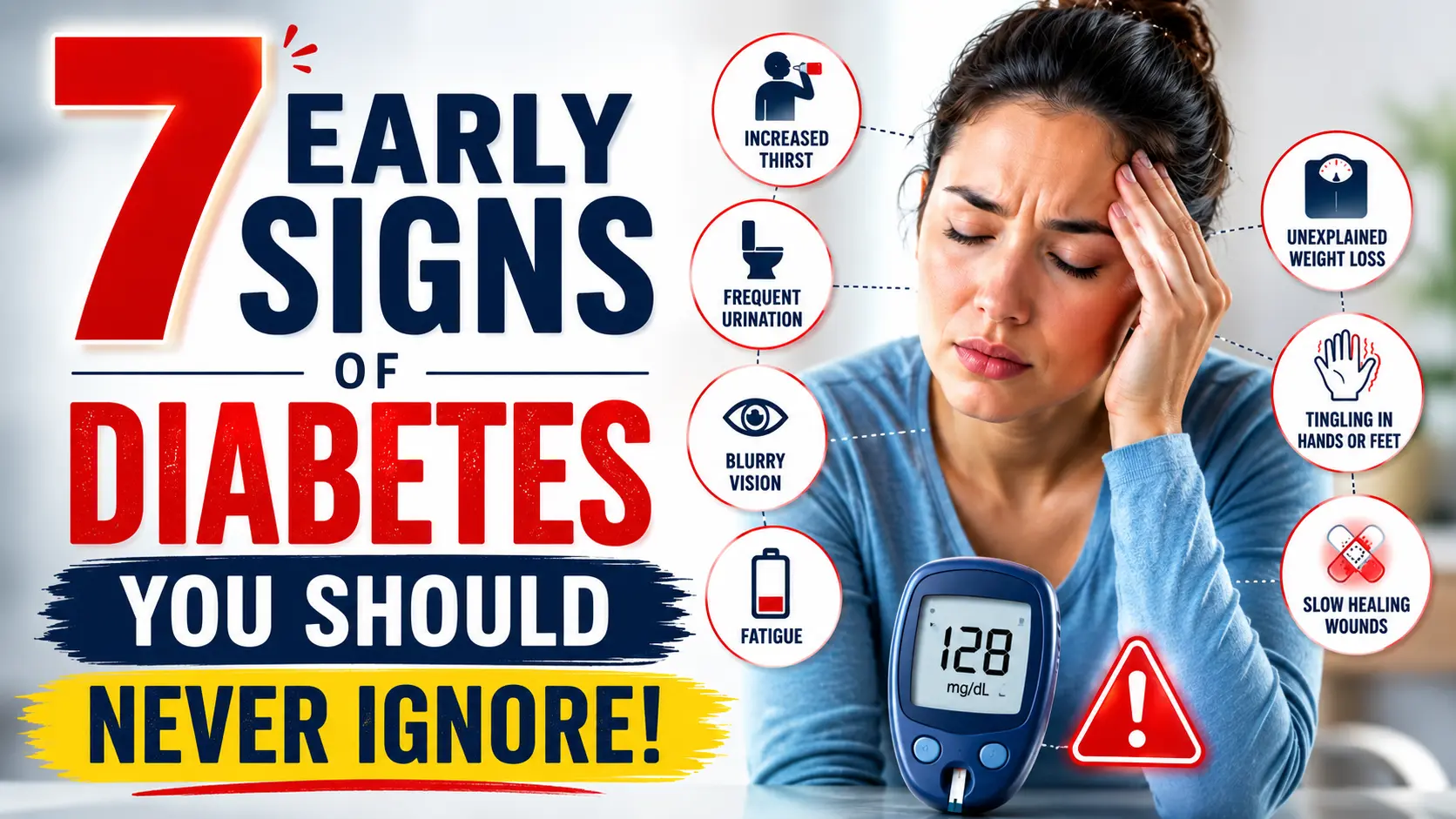
Diabetes often develops slowly, and the first signs can be easy to miss. Some people assume they are just tired, dehydrated, or under stress, but the body may actually be giving early warning signals. Recognizing these changes early can help you get tested sooner and avoid bigger health problems later. This article covers the common early symptoms in a simple way. It is meant to help readers understand what to watch for, not to replace medical advice.
Going to the bathroom more often than usual is one of the classic early signs of diabetes. This may happen during the day, but many people notice it more at night because it interrupts sleep. When blood sugar is too high, the kidneys try to remove the extra sugar through urine.
That process can make you urinate more often than normal. If this keeps happening without a clear reason, it should not be ignored.
2. Excessive Thirst
If you feel thirsty all the time, even after drinking enough water, it may be a warning sign. Frequent urination can lead to fluid loss, which makes the body feel dehydrated. That dehydration often causes ongoing thirst.
Some people keep drinking water but still do not feel satisfied. When thirst becomes unusual or constant, it is worth paying attention to.
Feeling tired after a busy day is normal. But diabetes-related fatigue is different because it can happen even when you are resting well. This happens because the body is not using sugar properly for energy.
As a result, you may feel weak, drained, or mentally slow. If low energy becomes a regular pattern, it may be time to check your blood sugar.
4. Blurred Vision
Diabetes can affect the eyes in the early stages. High blood sugar may cause the lens of the eye to swell, which can make vision blurry or unstable. Some people notice this only for a short time, while others experience it more often.
If your eyesight suddenly changes or becomes unclear without another obvious cause, do not ignore it. Eye changes can be an early clue that blood sugar is not under control.
5. Slow Healing of Cuts and Wounds
Small cuts, scratches, or sores may take longer than usual to heal. This can happen because high blood sugar affects circulation and slows the body’s repair process. It can also make the skin more prone to infection.
You may notice that a simple wound stays red or open for longer than expected. If healing feels unusually slow, it is a symptom worth checking.
6. Increased hunger
Feeling hungry often, even soon after eating, can also be an early signs of diabetes. When the body cannot properly use glucose, the cells may not get enough energy. This can leave you feeling hungry again very quickly.
Some people describe it as a constant urge to eat. If hunger seems out of proportion to your meals, it may be more than just appetite.
7. Unexplained Weight Loss
Losing weight without trying is another symptom that should raise concern. When the body cannot use sugar for energy, it may begin breaking down fat and muscle instead. This can lead to noticeable weight loss even if eating habits have not changed.
Sudden weight loss is not always caused by diabetes, but it should never be brushed off. It is especially important to pay attention if it happens along with thirst, fatigue, or frequent urination.
When to See a Doctor
These symptoms do not always mean diabetes, but they should not be ignored. If you notice more than one of them, especially for several days or weeks, it is a good idea to speak with a doctor and get your blood sugar checked. A simple test can help you find out whether the symptoms have a diabetes-related cause.
Early testing is important because diabetes is easier to manage when it is caught sooner. It also helps reduce the risk of complications later.
Final note
The early signs of diabetes are often subtle, but they matter. Paying attention to small changes in your body can make a real difference. If these symptoms seem familiar, it is better to check early than to wait.
Over 38.4 million Americans are living with diabetes today—that’s more than 1 in 10 people. Even more concerning? Nearly 8.7 million don’t even know they have it yet.
If you’ve been experiencing unexplained thirst, frequent urination, or persistent fatigue, understanding diabetes could be the first step toward taking control of your health.
Diabetes is a chronic condition that affects how your body processes food into energy. While it’s serious, it’s also highly manageable with today’s treatments and technologies. Whether you’ve just been diagnosed, want to prevent it, or are supporting a loved one, this guide covers everything you need to know.
In this guide, you’ll learn:
What diabetes is and how it affects your body
The different types and their key differences
Recognizable symptoms and warning signs
How diabetes is diagnosed and treated
Prevention strategies that work
How to live well with diabetes
According to the CDC, diabetes is the 8th leading cause of death in the United States. Yet with proper management—blood sugar monitoring, medication when needed, and healthy lifestyle choices—most complications are preventable.
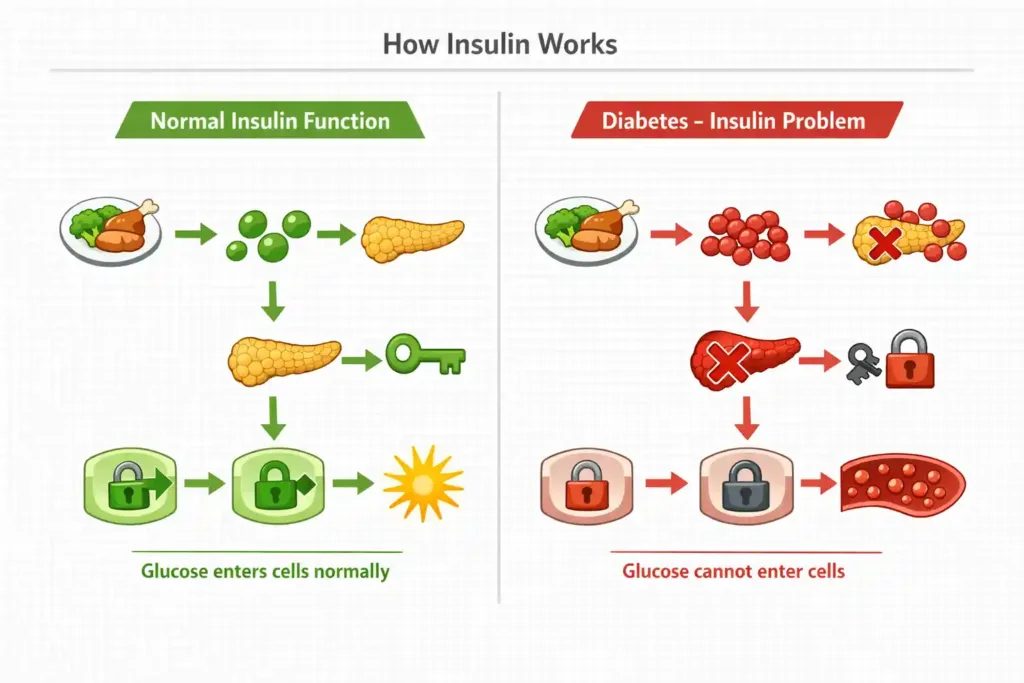
Understanding how insulin works in healthy bodies versus diabetes
Diabetes is a chronic health condition where your body has trouble regulating blood sugar (glucose) levels. Here’s how it works:
When you eat, your body breaks down food into glucose and releases it into your bloodstream. Your pancreas then produces a hormone called insulin, which acts like a key that unlocks your cells to let glucose in for energy.
In diabetes, this system breaks down in one of two ways:
Your body stops making insulin (Type 1 diabetes)
Your body doesn’t respond to insulin properly (Type 2 diabetes – called insulin resistance)
When insulin isn’t working correctly, glucose builds up in your bloodstream instead of entering your cells. This creates two problems: your blood has too much sugar (which damages organs over time), and your cells are starving for energy.
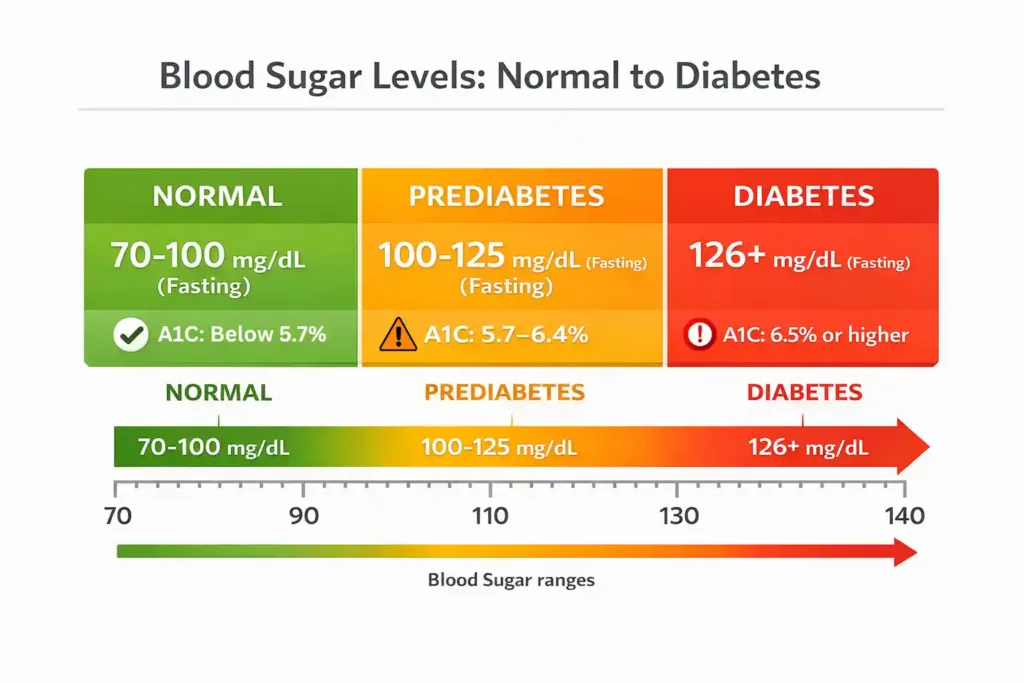
Blood sugar in the United States is measured in milligrams per deciliter (mg/dL):
Normal blood sugar ranges compared to prediabetes and diabetes levels
Normal Levels:
Fasting: 70-100 mg/dL
After eating: Less than 140 mg/dL
A1C: Below 5.7%
Prediabetes:
Fasting: 100-125 mg/dL
A1C: 5.7-6.4%
Diabetes:
Fasting: 126 mg/dL or higher
A1C: 6.5% or higher
The A1C test is particularly important—it shows your average blood sugar over the past 2-3 months, according to the American Diabetes Association.
Why A1C test Matters
Chronically high blood sugar damages blood vessels throughout your body, leading to serious complications like heart disease, kidney failure, vision loss, and nerve damage. The CDC reports that adults with diabetes are nearly twice as likely to have heart disease or stroke.
However, keeping your A1C below 7% can reduce complication risk by 40-75%, per ADA research.
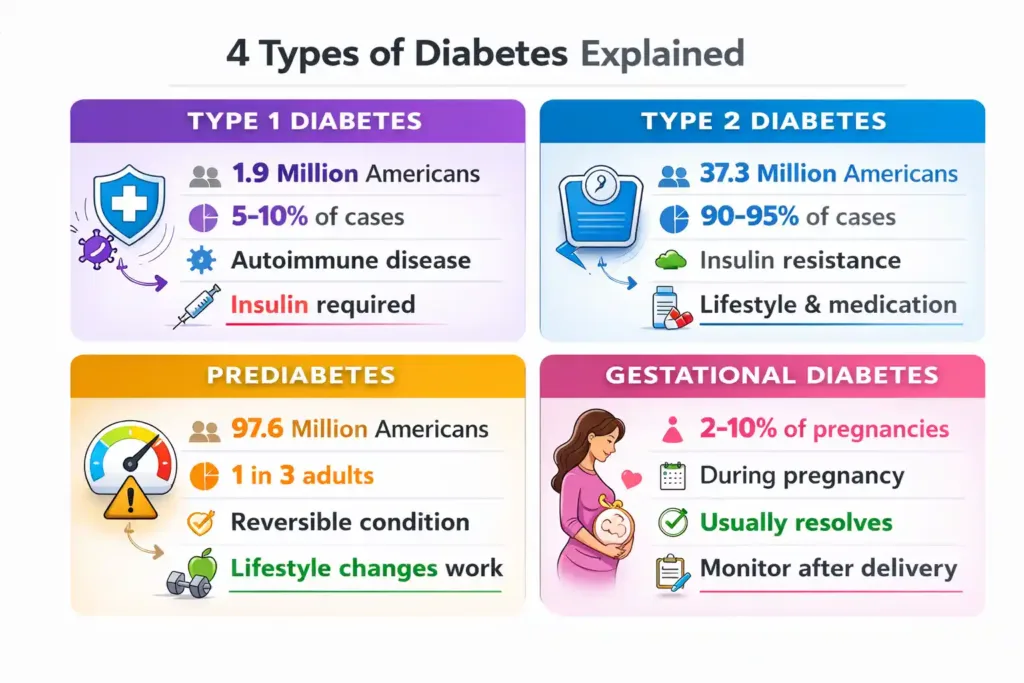
The 4 Main Types of Diabetes
Not all diabetes is the same. Understanding which type you have is essential because treatment differs significantly.
Type 1 Diabetes
What it is: An autoimmune disease where your immune system destroys the insulin-producing cells in your pancreas. Your body makes no insulin at all.
Who gets it: About 1.9 million Americans (5-10% of all diabetes cases). While often diagnosed in children and teens, it can develop at any age.
Key facts:
Develops rapidly (symptoms appear in weeks to months)
Requires insulin therapy from day one
Not caused by diet or lifestyle
Cannot be prevented with current knowledge
Previously called “juvenile diabetes”
Treatment: Daily insulin injections or insulin pump, plus blood sugar monitoring, carbohydrate counting, and regular exercise.
Type 2 Diabetes
Understanding the four main types of diabetes and their key differences
What it is: Your body becomes resistant to insulin and/or doesn’t produce enough. Insulin works less effectively, like a key that doesn’t fit the lock properly.
Who gets it: About 37.3 million Americans (90-95% of all diabetes cases). Usually develops after age 45, but increasingly affecting younger people.
Key facts:
Develops slowly over years, often with no symptoms
Strongly linked to excess weight (80-85% of people with type 2 are overweight)
Influenced by genetics, diet, and physical inactivity
Often preventable or reversible in early stages
Previously called “adult-onset diabetes”
Treatment: Starts with lifestyle changes (diet, exercise, weight loss). If needed, medications like Metformin, SGLT2 inhibitors (Jardiance, Farxiga), or GLP-1 agonists (Ozempic, Trulicity). Insulin may be added later.
The good news: According to the CDC’s National Diabetes Prevention Program, losing 5-7% of body weight and exercising 150 minutes weekly reduces type 2 diabetes risk by 58%.
Prediabetes
What it is: Blood sugar levels higher than normal but not yet diabetes. A critical warning sign.
Who has it: 97.6 million American adults—that’s 1 in 3 adults. Over 80% don’t know they have it because there are usually no symptoms.
Diagnostic numbers:
Fasting glucose: 100-125 mg/dL
A1C: 5.7-6.4%
Why it matters: Without intervention, 15-30% of people with prediabetes develop type 2 diabetes within 5 years.
The silver lining: Prediabetes is reversible through lifestyle changes—weight loss, healthy eating, and regular physical activity.
Gestational Diabetes
What it is: Diabetes that develops during pregnancy, usually around week 24-28.
Who gets it: 2-10% of pregnancies in the US (200,000-300,000 cases annually), per the American College of Obstetricians and Gynecologists.
Why it matters: Can cause complications for both mother and baby, including high birth weight, premature birth, and increased C-section risk. Women who’ve had it have a 50% chance of developing type 2 diabetes within 5-10 years.
Treatment: Blood sugar monitoring, healthy meal plan, exercise, and insulin if needed.
The good news: Usually resolves after delivery, though blood sugar should be tested 6-12 weeks postpartum.
Quick Comparison Table
Type
Prevalence (US)
Cause
Insulin Required?
Preventable?
Type 1
1.9 million
Autoimmune
Always
No
Type 2
37.3 million
Insulin resistance
Sometimes
Often yes
Prediabetes
97.6 million
Early insulin resistance
No
Yes (reversible)
Gestational
2-10% of pregnancies
Pregnancy hormones
Sometimes
Sometimes
Other Rare Types
LADA (Latent Autoimmune Diabetes in Adults): Slow-developing type 1 in adults
MODY: Genetic diabetes running in families
Secondary diabetes: Caused by medications (like steroids) or other conditions
Understanding your specific diabetes type is crucial because treatment approaches differ significantly. Your doctor will determine your type based on symptoms, blood tests, age, and how you respond to treatment.
Next, let’s look at the symptoms that might indicate diabetes—because early detection is key to preventing complications.
Diabetes Symptoms: What to Watch For
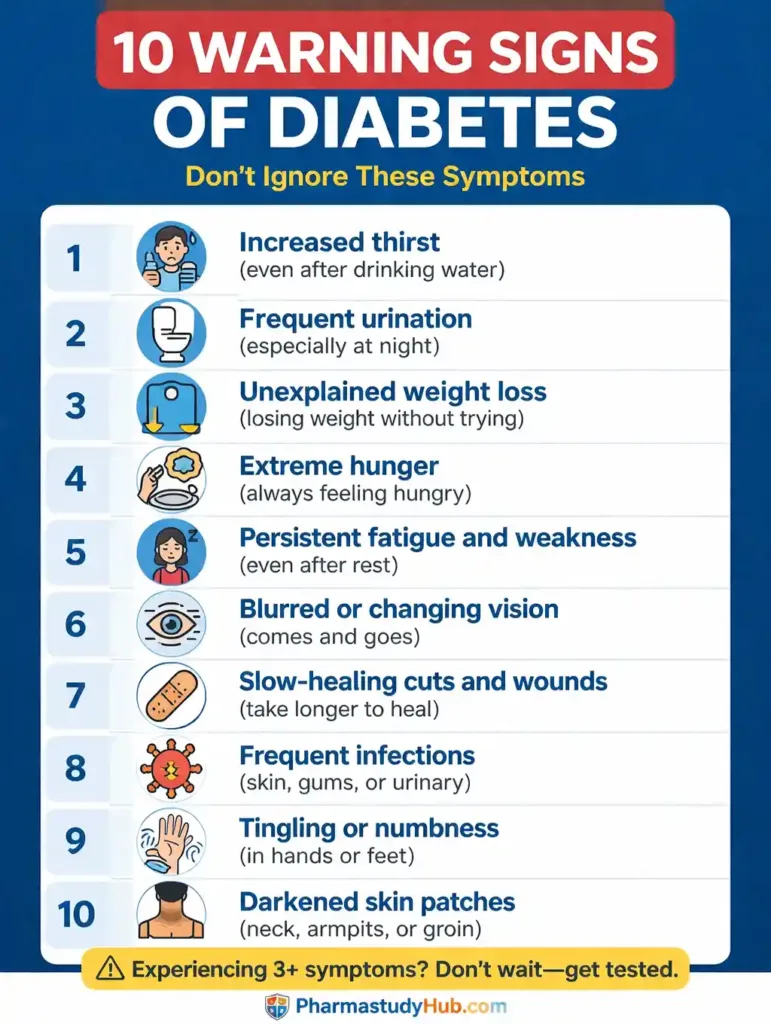
Early warning signs of diabetes you shouldn’t ignore
Recognizing diabetes symptoms early can prevent serious complications. Here are the warning signs that shouldn’t be ignored.
Common Symptoms of Diabetes
Both type 1 and type 2 diabetes share similar symptoms, though they appear differently:
Classic Warning Signs:
Increased thirst (polydipsia) – feeling thirsty even after drinking
Frequent urination, especially at night – your kidneys work overtime to flush out excess sugar
Extreme hunger – cells aren’t getting energy, so your body signals for more food
Unexplained weight loss – especially common in type 1, despite eating more
Fatigue and weakness – cells can’t access glucose for energy
Blurred vision – high blood sugar affects the lens in your eye
Slow-healing cuts or sores – high glucose impairs immune function and circulation
Frequent infections – particularly skin, gum, or urinary tract infections
Tingling or numbness in hands or feet – early nerve damage
How Symptoms Differ by Type
Type 1 Diabetes:
Symptoms develop rapidly – over weeks or months
Often severe from the start
May include diabetic ketoacidosis (DKA) symptoms: fruity breath odor, nausea, vomiting, abdominal pain, confusion
Common age of onset: children, teens, young adults (but can occur at any age)
Type 2 Diabetes:
Symptoms develop slowly – over months to years
Often mild or unnoticeable initially
Many people have no symptoms at all
Usually discovered during routine blood work
More common in adults over 45, though increasingly affecting younger people
Prediabetes:
Usually no symptoms
Possible sign: darkened skin patches (acanthosis nigricans) on neck, armpits, or groin
This is why screening is so important
When to See a Doctor
According to the American Diabetes Association, you should get tested if you:
Experience any of the classic diabetes symptoms
Are age 35 or older (routine screening recommended)
Are overweight with additional risk factors
Have a family history of diabetes
Had gestational diabetes
Are African American, Hispanic/Latino, Native American, Asian American, or Pacific Islander
Emergency Warning Signs
Seek immediate medical care if you experience:
Extreme thirst with very dry mouth
Fruity-smelling breath
Nausea or vomiting
Shortness of breath
Confusion or difficulty concentrating
Abdominal pain
These may indicate diabetic ketoacidosis (DKA), a life-threatening complication that requires emergency treatment. DKA causes about 30,000 hospitalizations annually in the US, per CDC data.
Why Early Detection Matters
The CDC reports that 1 in 5 people with diabetes don’t know they have it. This is dangerous because:
High blood sugar silently damages organs even without symptoms
Early treatment prevents or delays complications
Type 2 diabetes can often be reversed in early stages
Prediabetes is still reversible
Bottom line: If you’re experiencing any diabetes symptoms, don’t wait. Early diagnosis and treatment can make a significant difference in your long-term health outcomes.
Many people ignore symptoms because they develop gradually or seem minor. Don’t make this mistake—schedule an appointment with your primary care physician for a simple blood test.
Causes and Risk Factors
Understanding what causes diabetes and your personal risk factors can help you take preventive action—especially for type 2 diabetes.
Type 1 Diabetes Causes
What causes it: Type 1 diabetes is an autoimmune disease where your immune system mistakenly attacks and destroys insulin-producing beta cells in the pancreas. The exact trigger is unknown.
Risk factors:
Genetics – Having a parent or sibling with type 1 increases risk to about 10%
Age – Most common in children and young adults, though can develop at any age
Possible environmental triggers – Certain viruses may play a role
Geography – More common in people from Northern Europe
Important: Type 1 diabetes is NOT caused by:
Diet or sugar consumption
Being overweight
Lack of exercise
Anything you did or didn’t do
According to the National Institute of Diabetes (NIDDK), type 1 diabetes cannot be prevented with current knowledge.
Type 2 Diabetes Causes
What causes it: Type 2 diabetes develops when your body becomes resistant to insulin (insulin resistance) and your pancreas can’t produce enough insulin to overcome this resistance. It’s a combination of genetic and lifestyle factors.
Major Risk Factors:
Modifiable (You Can Change):
✓ Overweight or obesity – 80-85% of people with type 2 diabetes are overweight, per CDC
✓ Unhealthy diet – High in processed foods, refined carbs, sugary drinks
✓ Smoking – Increases risk by 30-40%
✓ Excessive alcohol – Heavy drinking raises risk
Non-Modifiable (You Can’t Change):
Age 45 or older (though younger people increasingly affected)
Family history – Having a parent or sibling with type 2 diabetes
Race/ethnicity – Higher risk in:
African Americans
Hispanic/Latino Americans
Native Americans
Asian Americans
Pacific Islanders
History of gestational diabetes
Polycystic ovary syndrome (PCOS)
History of heart disease or stroke
Other Medical Conditions:
High blood pressure (140/90 mmHg or higher)
Low HDL cholesterol (below 40 mg/dL for men, below 50 mg/dL for women)
High triglycerides (above 250 mg/dL)
The Weight-Diabetes Connection
Excess weight, especially around the abdomen, is the strongest modifiable risk factor for type 2 diabetes. Here’s why:
Fat cells, particularly belly fat, release chemicals that make cells resistant to insulin
More fat means more insulin resistance
Your pancreas works harder and harder until it can’t keep up
The good news: Losing just 5-10% of your body weight (10-20 lbs for a 200 lb person) can significantly reduce your risk, according to the American Diabetes Association.
Prediabetes Risk Factors
Risk factors for prediabetes are the same as type 2 diabetes:
Overweight/obesity
Age 35+
Family history
Physical inactivity
High-risk race/ethnicity
History of gestational diabetes
Check your risk: Take the ADA’s free Type 2 Diabetes Risk Test at diabetes.org/risk-test
Gestational Diabetes Risk Factors
Higher risk if you:
Are overweight before pregnancy
Are over age 25
Had gestational diabetes in a previous pregnancy
Have a family history of diabetes
Are African American, Hispanic/Latino, Native American, Asian American, or Pacific Islander
Have PCOS
Previously gave birth to a baby over 9 lbs
The American College of Obstetricians and Gynecologists (ACOG) recommends screening all pregnant women between 24-28 weeks.
Can You Reduce Your Risk?
Type 1 diabetes: No proven prevention methods currently exist.
Type 2 diabetes: Highly preventable! The CDC’s Diabetes Prevention Program showed that:
Weight loss of 5-7% reduces risk by 58%
150 minutes of weekly exercise reduces risk by 30-40%
Combining both is even more effective
Prediabetes: Completely reversible through lifestyle changes in most cases.
Key message: While you can’t change your age, genetics, or ethnicity, you CAN control your weight, activity level, diet, and other lifestyle factors. For type 2 diabetes, these controllable factors often make the biggest difference.
How Diabetes is Diagnosed
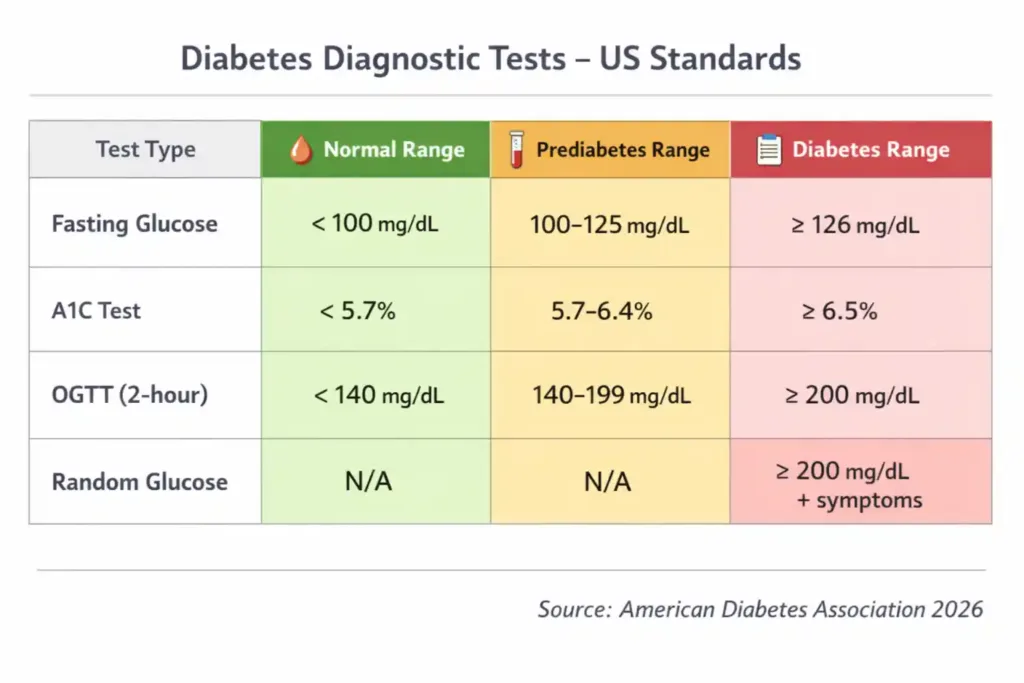
How diabetes is diagnosed: Understanding your blood test results
Early diagnosis is crucial. The American Diabetes Association recommends diabetes screening for all adults age 35 and older, regardless of risk factors.
Diagnostic Tests (Blood Sugar Tests)
Healthcare providers use several blood tests to diagnose diabetes. You only need one positive result (confirmed by repeat testing) to be diagnosed.
1. Fasting Plasma Glucose (FPG) Test
How it works: Measures blood sugar after an 8-hour fast (usually overnight).
Results:
Normal: Less than 100 mg/dL
Prediabetes:100-125 mg/dL
Diabetes:126 mg/dL or higher (on two separate tests)
Pros: Simple, inexpensive, widely available Cons: Requires fasting
2. A1C Test (Hemoglobin A1C)
How it works: Measures your average blood sugar over the past 2-3 months. No fasting required.
Results:
Normal: Below 5.7%
Prediabetes: 5.7% to 6.4%
Diabetes: 6.5% or higher
Pros: No fasting needed, shows long-term blood sugar control Cons: Can be affected by certain conditions (anemia, kidney disease)
The A1C test is the preferred diagnostic test according to ADA guidelines because it provides a broader picture of blood sugar control.
3. Oral Glucose Tolerance Test (OGTT)
How it works: You drink a sweet liquid containing 75 grams of glucose. Blood sugar is tested 2 hours later.
Results (2-hour reading):
Normal: Less than 140 mg/dL
Prediabetes:140-199 mg/dL
Diabetes:200 mg/dL or higher
Pros: Very accurate Cons: Takes 2+ hours, requires fasting, less convenient
When used: Primarily for diagnosing gestational diabetes in pregnant women (24-28 weeks).
4. Random Plasma Glucose Test
How it works: Blood sugar checked at any time, without fasting.
Results:
Diabetes: 200 mg/dL or higher (with classic diabetes symptoms)
When used: When someone has obvious diabetes symptoms like extreme thirst, frequent urination, or unexplained weight loss.
Diagnostic Criteria Summary
Test Type
Normal
Prediabetes
Diabetes
Fasting glucose
<100 mg/dL
100-125 mg/dL
≥126 mg/dL
A1C
<5.7%
5.7-6.4%
≥6.5%
OGTT (2-hour)
<140 mg/dL
140-199 mg/dL
≥200 mg/dL
Random glucose
N/A
N/A
≥200 mg/dL + symptoms
Who Should Get Tested?
The ADA recommends screening for:
Adults age 35+ (everyone) – Even without risk factors
Adults of any age who are overweight (BMI ≥25) PLUS one or more risk factors:
Kidney function tests – Checks for early kidney damage
Cholesterol panel – Assesses heart disease risk
Eye exam – Screens for retinopathy
What If You’re Diagnosed with Prediabetes?
Don’t panic—this is your wake-up call to take action. According to the National Institute of Diabetes:
Prediabetes can be reversed with lifestyle changes
You should be retested every year
Your doctor may prescribe Metformin if you’re at very high risk
Enroll in the CDC’s National Diabetes Prevention Program (covered by many insurance plans and Medicare)
Bottom line: If you’re at risk or experiencing symptoms, don’t wait. A simple blood test can provide answers and allow you to take action before serious complications develop. Early detection saves lives.
Diabetes Treatment Options
While diabetes is a chronic condition, it can be effectively managed. Treatment varies based on type and individual needs, but the goal is always the same: keep blood sugar in target range to prevent complications.
Type 1 Diabetes Treatment
Essential Treatment: Type 1 diabetes requires insulin therapy from day one—it’s not optional. Without insulin, you cannot survive.
Insulin Delivery Methods:
Multiple daily injections (MDI) – 4-6 shots per day using syringes or insulin pens
Insulin pump – Small device worn on body that delivers insulin continuously
Inhaled insulin (Afrezza) – For mealtime insulin only, not long-acting
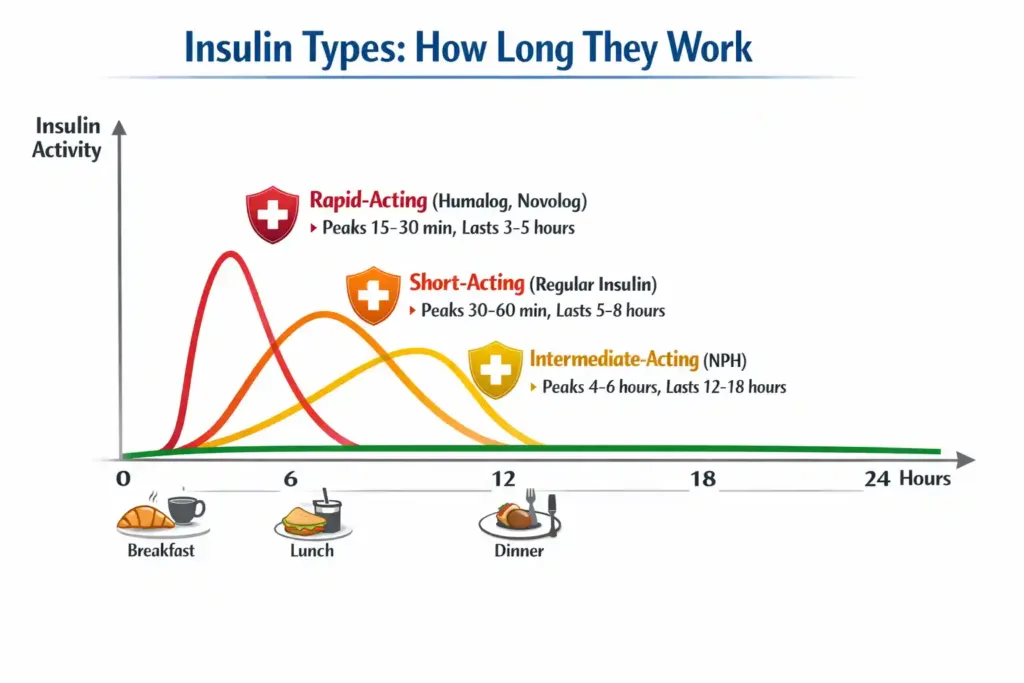
Types of Insulin:
Rapid-acting: Humalog, Novolog, Apidra (works in 10-15 minutes)
Short-acting: Regular insulin (works in 30-60 minutes)
Intermediate-acting: NPH insulin (works in 1-2 hours)
How they work: Help body produce more insulin after meals
Benefits: Well-tolerated, don’t cause weight gain
Side effects: Generally minimal
Sulfonylureas (Glipizide, Glyburide)
How they work: Stimulate pancreas to release more insulin
Benefits: Effective, inexpensive
Side effects: Risk of low blood sugar, weight gain
Other Options:
Thiazolidinediones (Actos)
Alpha-glucosidase inhibitors (Precose)
Combination medications
Stage 3: Insulin Therapy
Understanding rapid-acting, short-acting, intermediate, and long-acting insulin
Some people with type 2 diabetes eventually need insulin if oral medications don’t achieve target blood sugar levels. This is normal disease progression, not a failure.
Common insulin regimens for type 2:
Long-acting insulin once daily
Pre-mixed insulin twice daily
Combination of long-acting and mealtime insulin
Prediabetes Treatment
Primary Treatment: Lifestyle Changes
Weight loss (5-10% of body weight)
150 minutes weekly exercise
Healthy eating pattern
Stop smoking
Medication:
Metformin may be prescribed for high-risk individuals:
BMI ≥35
Age under 60
Women with history of gestational diabetes
CDC’s National Diabetes Prevention Program:
Evidence-based lifestyle change program
1-year structured program with trained coach
Covered by Medicare and many insurance plans
Find programs at: cdc.gov/diabetes/prevention
Gestational Diabetes Treatment
First-Line Treatment:
Blood sugar monitoring 4+ times daily
Healthy meal plan (work with dietitian)
Regular physical activity (as approved by doctor)
Target Blood Sugar (ACOG Guidelines):
Fasting: <95 mg/dL
1-hour after meals: <140 mg/dL
2-hours after meals: <120 mg/dL
Medication if needed:
Insulin – Safe during pregnancy, preferred option
Metformin or Glyburide – Sometimes used, but insulin is gold standard
Blood Sugar Monitoring
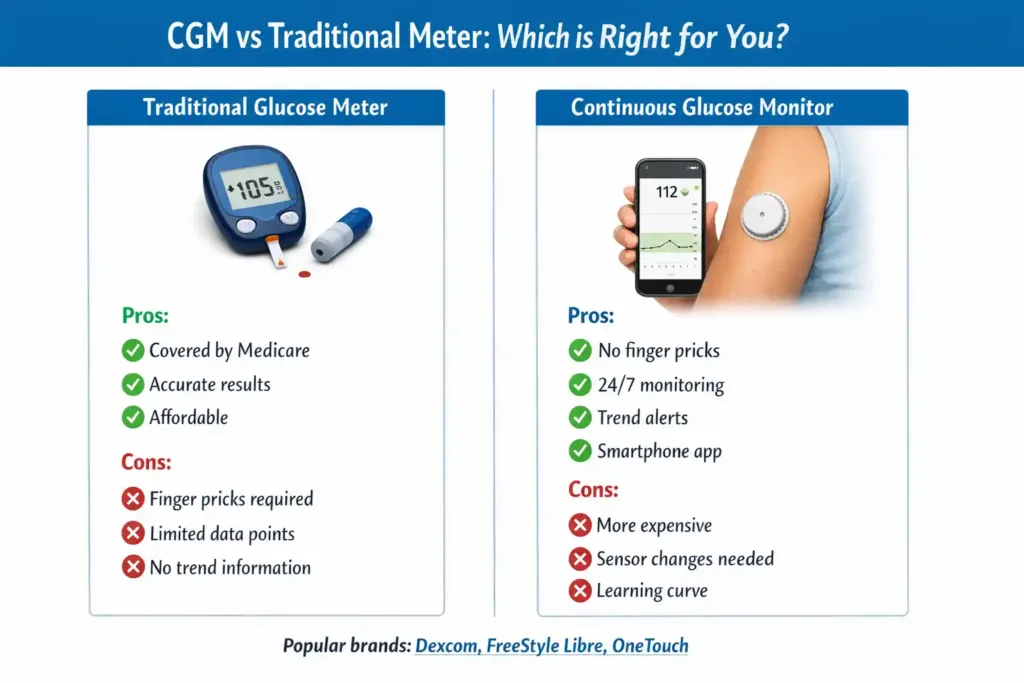
CGM vs finger-stick meters: Pros, cons, and which is best for you
Traditional Glucose Meters:
Finger-stick blood tests
Results in seconds
Brands: OneTouch, Contour, Accu-Chek
Medicare covers supplies
Continuous Glucose Monitors (CGM):
Small sensor inserted under skin
Tracks glucose 24/7
Sends readings to smartphone or receiver
Shows trends and alerts for highs/lows
Popular systems: Dexcom, FreeStyle Libre, Guardian
Medicare covers for insulin users
Treatment Comparison Table
Diabetes Type
First-Line Treatment
Medications
Insulin?
Lifestyle Role
Type 1
Insulin
Not applicable
Always required
Important for management
Type 2
Lifestyle changes
Often needed
Sometimes needed
Critical for management
Prediabetes
Lifestyle changes
Rarely (Metformin)
No
Primary treatment
Gestational
Diet + monitoring
If needed
If needed
Primary treatment
Working with Your Healthcare Team
Diabetes management requires a team approach:
Primary care doctor or endocrinologist – Overall care
According to the American Diabetes Association, people who receive diabetes self-management education have better outcomes and lower healthcare costs.
The Importance of A1C Goals
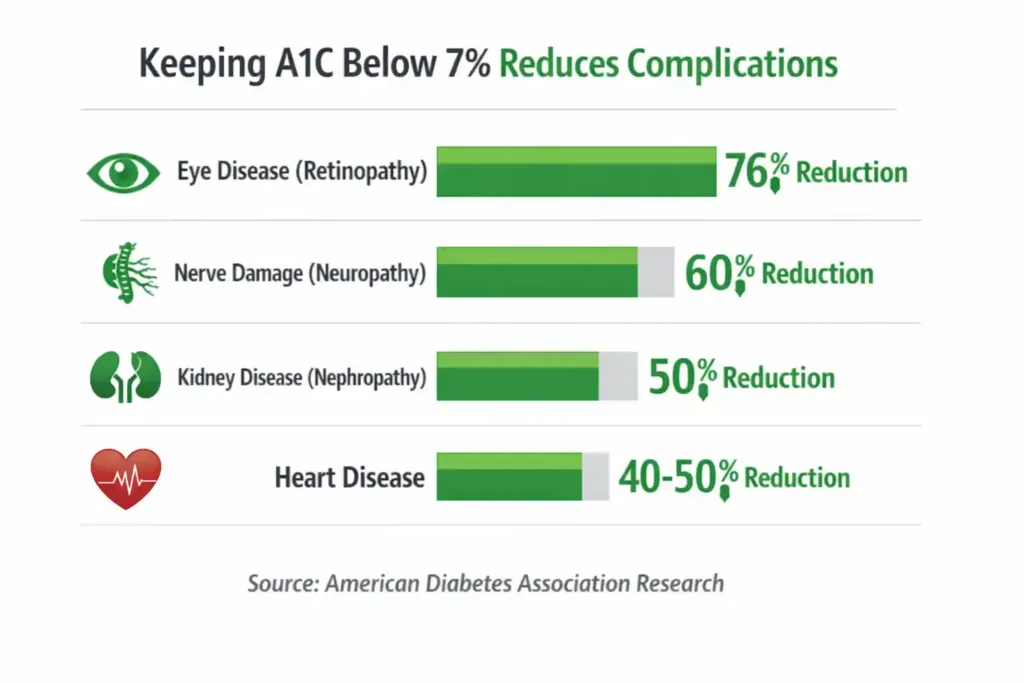
Keeping your A1C below 7% can reduce your risk of:
Eye disease by 76%
Kidney disease by 50%
Nerve damage by 60%
Heart disease by 40-50%
Bottom line: Diabetes treatment has never been more effective. With today’s medications, technology, and support, most people with diabetes can achieve excellent blood sugar control and prevent complications. The key is finding the right treatment plan for you and sticking with it.
Diabetes Complications: Why Treatment Matters
Uncontrolled diabetes can lead to serious health complications. The good news? Most are preventable with proper blood sugar management.
Severe hypoglycemia can cause seizures or unconsciousness—always carry glucose and wear medical ID.
Hyperglycemia (High Blood Sugar)
What it is: Blood sugar consistently above 180 mg/dL
Symptoms:
Increased thirst and urination
Headache, fatigue
Blurred vision
Treatment: Follow your diabetes management plan, drink water, check for ketones if very high.
Diabetic Ketoacidosis (DKA)
What it is: A life-threatening emergency, primarily in type 1 diabetes.
Warning signs:
Blood sugar over 250 mg/dL
Fruity-smelling breath
Nausea, vomiting, abdominal pain
Rapid breathing, confusion
Seek emergency care immediately. DKA causes approximately 30,000 hospitalizations annually in the US, per CDC data.
Long-Term Complications
Chronically high blood sugar damages blood vessels and nerves throughout your body.
Heart Disease and Stroke
The risk: Adults with diabetes are nearly 2x more likely to die from heart disease or stroke compared to people without diabetes, according to the CDC.
Why it happens: High glucose damages blood vessel walls, promotes atherosclerosis (plaque buildup), and increases blood pressure and cholesterol.
Prevention:
Keep A1C below 7%
Control blood pressure (<140/90 mmHg)
Manage cholesterol (statin medication often recommended)
The risk: Diabetes is the #1 cause of kidney failure in the United States. About 1 in 3 adults with diabetes has chronic kidney disease, per the National Institute of Diabetes.
Why it happens: High blood sugar damages the tiny filtering units in kidneys.
Prevention:
Annual kidney function tests (urine albumin, creatinine)
Keep blood sugar and blood pressure controlled
Certain medications (ACE inhibitors, ARBs) protect kidneys
Early detection allows treatment before irreversible damage
Eye Damage (Diabetic Retinopathy)
The risk: Diabetes is the leading cause of blindness in working-age Americans.
Why it happens: High glucose damages blood vessels in the retina.
Prevention:
Annual dilated eye exam (required)
Keep blood sugar controlled
Early treatment (laser therapy, injections) can prevent vision loss
Even with no symptoms, damage can be occurring—don’t skip eye exams.
Nerve Damage (Diabetic Neuropathy)
The risk: Affects up to 50% of people with diabetes over time.
Types:
Peripheral neuropathy – Numbness, tingling, pain in feet and legs
Autonomic neuropathy – Affects digestion, heart rate, sexual function, bladder control
Why it happens: High blood sugar and damaged blood vessels harm nerve fibers.
Prevention:
Tight blood sugar control
Annual foot exams
Daily foot checks at home
Proper footwear
Medications can help manage nerve pain
Foot Complications
The risk: About 130,000 diabetes-related amputations occur annually in the US, according to CDC data.
Why it happens: Combination of poor circulation + nerve damage = wounds don’t heal properly and infections spread.
Hearing impairment: 2x more common in people with diabetes
Alzheimer’s disease: 2x higher risk
Depression: 2-3x more common in people with diabetes
Gum disease: Higher risk of severe periodontal disease
The Good News: Prevention Works
According to landmark research by the American Diabetes Association:
How controlling A1C prevents diabetes complications
Keeping A1C below 7% reduces risk of:
Eye disease: 76%
Kidney disease: 50%
Nerve damage: 60%
Heart disease: 40-50%
Every 1% reduction in A1C (for example, from 8% to 7%) reduces the risk of complications by approximately 25-30%.
Regular Screening Schedule
To catch complications early, the ADA recommends:
Annual:
A1C test (every 3-6 months)
Dilated eye exam
Kidney function tests (urine albumin, creatinine)
Foot exam by healthcare provider
Cholesterol panel
Blood pressure check (every visit)
Every 6 months:
Dental checkups
Daily:
Foot self-checks
Bottom line: While these complications sound scary, remember that they develop over years of poor blood sugar control. With consistent management—keeping your blood sugar, blood pressure, and cholesterol in target ranges—most complications can be prevented or significantly delayed. Early detection through regular screenings allows treatment before irreversible damage occurs.
Living Well with Diabetes
The plate method: Simple portion control for diabetes management
Living with diabetes requires daily management, but with the right tools and habits, you can live a full, active life. Here’s how to manage diabetes day-to-day.
Daily Blood Sugar Monitoring
How Often to Check:
Type 1 diabetes: 4-10 times daily (before meals, bedtime, before exercise)
Type 2 on insulin: Multiple times daily as recommended
Type 2 on oral meds: Less frequently, per your doctor’s advice
Prediabetes: Periodic checks as recommended
Target Ranges (ADA):
Before meals: 80-130 mg/dL
1-2 hours after meals: Less than 180 mg/dL
Bedtime: 100-140 mg/dL
A1C: Below 7% (or personalized goal)
Monitoring Options:
Traditional Glucose Meters:
Finger-stick test with small blood sample
Results in 5-10 seconds
Medicare covers test strips
Popular brands: OneTouch, Contour, Accu-Chek
Continuous Glucose Monitors (CGM):
Dexcom, FreeStyle Libre, Guardian
Small sensor under skin
Reads glucose every 5 minutes
Sends data to smartphone
Shows trends and alerts for highs/lows
Medicare covers for insulin users
Healthy Eating for Diabetes
No single “diabetes diet” exists, but certain principles help control blood sugar.
Key Principles:
1. Carbohydrate Awareness
Carbs have the biggest impact on blood sugar
Focus on quality: whole grains, vegetables, fruits, beans
Limit: white bread, white rice, sugary drinks, sweets
Consider carb counting if on insulin
2. The Plate Method (ADA recommendation)
½ plate: Non-starchy vegetables (broccoli, spinach, peppers)
¼ plate: Lean protein (chicken, fish, beans, tofu)
Bottom line: Living with diabetes means incorporating healthy habits into your daily routine. It takes effort and planning, but millions of Americans successfully manage diabetes while working, traveling, exercising, and enjoying life. The key is consistency, not perfection. Small daily choices add up to better health outcomes over time.
Can Diabetes Be Prevented?
The answer depends on the type. Type 1 diabetes cannot be prevented, but type 2 diabetes and prediabetes progression can often be prevented or delayed through lifestyle changes.
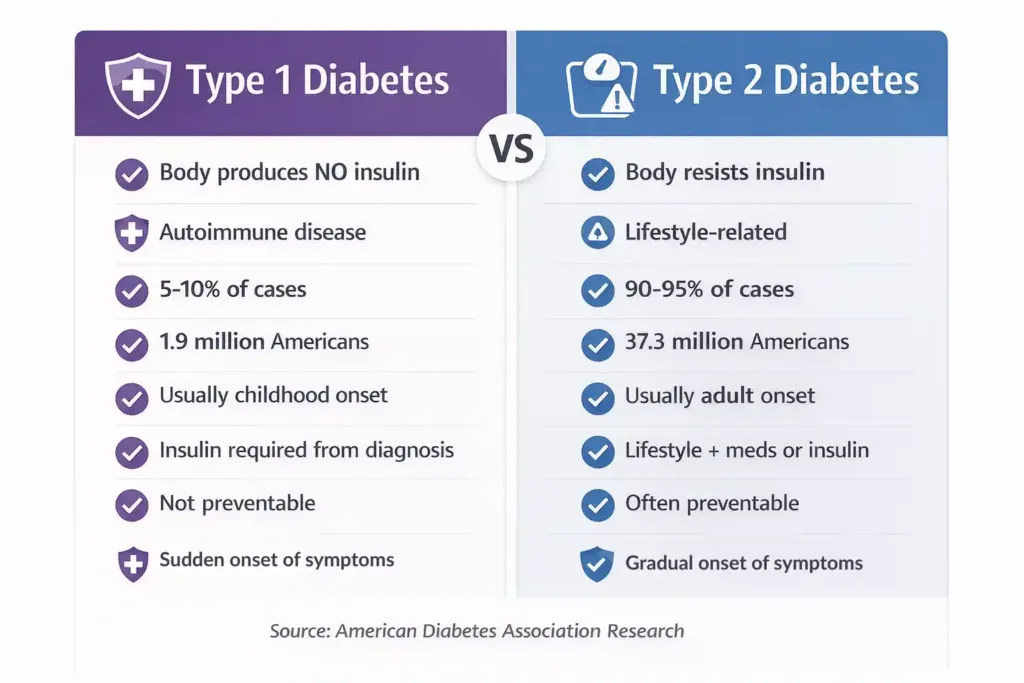
Type 1 vs Type 2 diabetes: Understanding the key differences
Type 1 Diabetes: Not Preventable
Current reality: There is no known way to prevent type 1 diabetes. It’s an autoimmune condition triggered by factors we don’t fully understand.
What doesn’t cause it:
Diet or sugar consumption
Weight or lifestyle choices
Anything you did or didn’t do
Research ongoing: Scientists are studying ways to prevent or delay type 1 diabetes in people at high risk, but no proven prevention methods exist yet.
Type 2 Diabetes: Highly Preventable
The CDC’s landmark Diabetes Prevention Program showed that lifestyle changes can reduce type 2 diabetes risk by 58%—and by 71% in people over age 60.
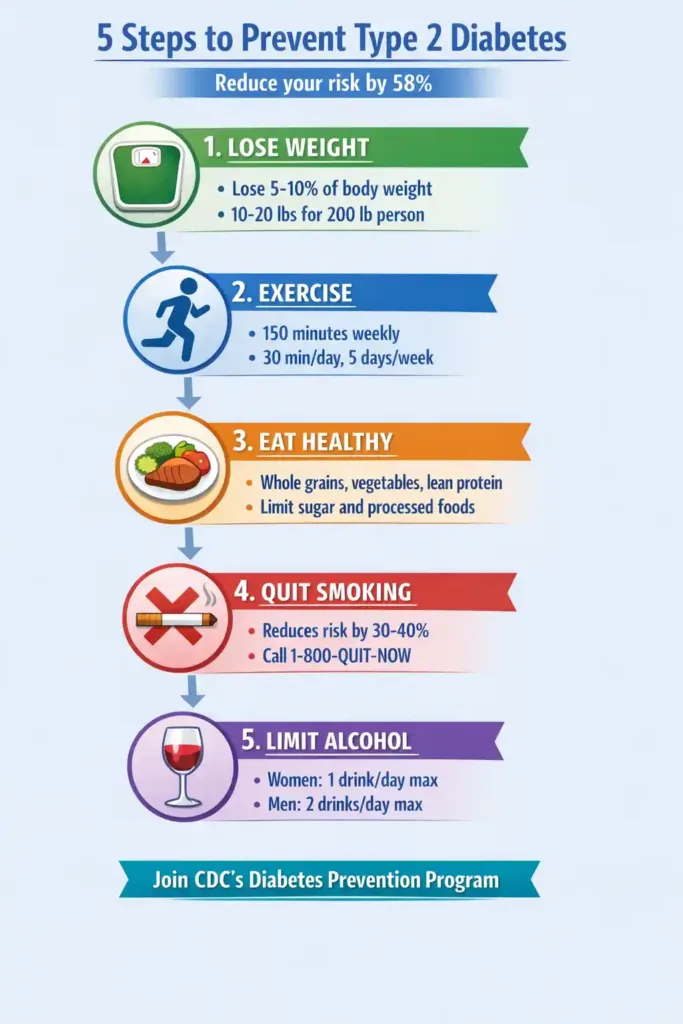
How to prevent Type 2 diabetes: 5 proven strategies that reduce risk by 58%
Evidence-Based Prevention Strategies
1. Achieve and Maintain Healthy Weight
The impact: Losing just 5-10% of your body weight significantly reduces diabetes risk.
For a 200 lb person:
10-20 lb weight loss = major risk reduction
Even 5-7 lbs makes a difference
Why it works: Excess weight, especially around the abdomen, causes insulin resistance. Weight loss improves how your cells respond to insulin.
2. Get Regular Physical Activity
The goal: 150 minutes of moderate activity per week (ADA recommendation)
Examples:
Brisk walking (30 minutes, 5 days/week)
Swimming, cycling, dancing
Yard work, active housework
Any movement is better than none
The impact: Regular exercise reduces diabetes risk by 30-40%, even without weight loss.
Why it works:
Helps cells use insulin more effectively
Burns glucose for energy
Reduces belly fat
Improves overall health
3. Eat a Healthy Diet
Focus on:
Vegetables (especially non-starchy)
Whole grains over refined grains
Lean proteins
Healthy fats (nuts, olive oil, avocado)
Water instead of sugary drinks
Limit:
Refined carbohydrates (white bread, white rice)
Sugary beverages (soda, sweet tea, juice)
Processed foods
Red and processed meats
Trans fats
Recommended patterns:
Mediterranean diet – Associated with 20-30% lower diabetes risk
DASH diet – Originally for blood pressure, also prevents diabetes
Plant-based diet – Lower diabetes risk in multiple studies
4. Quit Smoking
The impact: Smokers are 30-40% more likely to develop type 2 diabetes than non-smokers, according to CDC data.
After quitting: Risk begins to decrease within years of quitting.
Over 500,000 participants have joined the program since 2010.
Preventing Prediabetes Progression
If you have prediabetes, you have a critical window to prevent type 2 diabetes.
Without intervention:
15-30% develop diabetes within 5 years
70% eventually develop diabetes
With lifestyle changes:
Risk reduced by 58%
Many people return to normal blood sugar levels
Action steps:
Lose 5-10% of body weight
Exercise 150 minutes per week
Follow healthy eating pattern
Get retested annually
Consider Metformin if high risk (BMI ≥35, age <60, history of gestational diabetes)
The message: Prediabetes is a wake-up call, not a life sentence.
Preventing Gestational Diabetes
While gestational diabetes can’t always be prevented, you can reduce your risk:
Before pregnancy:
Reach healthy weight
Establish regular exercise routine
Eat balanced diet
During pregnancy:
Gain appropriate weight (as recommended by doctor)
Stay physically active (with doctor approval)
Eat healthy, balanced meals
Attend all prenatal appointments
Note: Some risk factors (age, genetics) can’t be changed, but lifestyle factors make a difference.
Preventing Diabetes Complications
If you already have diabetes, you can prevent or delay complications:
Keep these in target range:
A1C: Below 7% (or personalized goal)
Blood pressure: Below 140/90 mmHg
Cholesterol: LDL <100 mg/dL (or <70 mg/dL if heart disease)
Take these actions:
Take medications as prescribed
Monitor blood sugar regularly
Get annual screenings (eyes, kidneys, feet)
Don’t smoke
Maintain healthy weight
Stay physically active
Manage stress
The impact: Keeping A1C below 7% reduces complication risk by 40-75%.
Know Your Risk
Take the ADA’s Type 2 Diabetes Risk Test (1-minute online quiz):
Visit: diabetes.org/risk-test
Assesses: Age, weight, family history, activity level, race/ethnicity
Provides: Personalized risk score and recommendations
High-risk groups should get tested:
Age 35+
Overweight with additional risk factors
African American, Hispanic/Latino, Native American, Asian American, Pacific Islander
Family history of diabetes
History of gestational diabetes
PCOS
The Cost of Prevention vs. Treatment
Prevention is cost-effective:
Diabetes costs: $327 billion annually in the US
Per person with diabetes: $16,752 in medical costs yearly (2.3x higher than without diabetes)
Complications add thousands more
Lifestyle changes cost little to nothing:
Walking is free
Healthy eating can reduce food costs
CDC’s prevention program: $0-400 for full year
Compare to: Diabetes medications ($200-500/month), supplies, doctor visits
Investment in prevention pays off in better health and lower costs.
Success Stories
According to the National Institute of Diabetes:
The Diabetes Prevention Program followed participants for 15 years
Those who made lifestyle changes maintained 58% risk reduction
Weight loss didn’t have to be permanent—even small sustained loss helped
Exercise benefits persisted even if participants didn’t lose weight
Real-world impact: For every 7 people who complete the program, 1 case of diabetes is prevented.
Bottom line: While you can’t prevent type 1 diabetes, you have significant control over type 2 diabetes risk through lifestyle choices. Even if you have prediabetes or family history, you’re not destined to develop diabetes. Small, consistent changes—losing 10-15 pounds, walking 30 minutes most days, choosing water over soda—can cut your risk in half. The best time to start is now.
Frequently Asked Questions
Q1: What is the main cause of diabetes?
Type 1: Autoimmune reaction destroys insulin-producing cells. Exact cause unknown, likely genetic + environmental triggers.
Type 2: Combination of insulin resistance and inadequate insulin production, caused by genetics, excess weight, inactivity, and diet. The CDC reports 90-95% of diabetes cases are type 2.
Q2: Can diabetes be cured?
No cure currently exists for any type of diabetes. However:
Type 2 diabetes can sometimes go into remission with significant weight loss and lifestyle changes
Prediabetes can be reversed completely
Type 1 and gestational diabetes cannot be cured but are manageable with treatment
Q3: What are the first signs of diabetes?
Common early signs include:
Increased thirst and frequent urination (especially at night)
Unexplained weight loss
Extreme fatigue
Blurred vision
Slow-healing wounds
Many people with type 2 diabetes have no symptoms initially—this is why screening is important.
Q4: What is a normal blood sugar level?
For people without diabetes:
Fasting: 70-100 mg/dL
After eating: Less than 140 mg/dL
A1C: Below 5.7%
For people with diabetes (ADA targets):
Before meals: 80-130 mg/dL
After meals: Less than 180 mg/dL
A1C: Below 7% (or personalized goal)
Q5: Is diabetes hereditary?
Yes, genetics play a role:
Type 1: 10% risk if a parent has it
Type 2: Significantly higher risk with family history, but lifestyle factors matter more
Having family history doesn’t guarantee you’ll develop diabetes—especially type 2, which is largely preventable.
Q6: What foods should diabetics avoid?
Limit these foods:
Sugary drinks (soda, sweet tea, juice)
White bread, white rice, pastries
Processed snacks and fast food
Foods high in trans fats
Excessive alcohol
Focus on: Vegetables, whole grains, lean proteins, healthy fats. The ADA emphasizes there’s no single “diabetes diet”—healthy eating patterns work best.
Q7: Can you develop diabetes from eating too much sugar?
Sugar alone doesn’t cause diabetes. However, consuming excess sugar and calories leads to weight gain, which is a major risk factor for type 2 diabetes. The CDC reports 80-85% of people with type 2 diabetes are overweight.
Q8: What’s the difference between type 1 and type 2 diabetes?
Type 1:
Body produces no insulin
Autoimmune disease
Requires insulin from diagnosis
Usually diagnosed in children/young adults
5-10% of cases
Type 2:
Body resists insulin or doesn’t make enough
Linked to weight and lifestyle
Often manageable with lifestyle changes and oral medications
Usually diagnosed in adults 45+
90-95% of cases
Q9: How often should I check my blood sugar?
Depends on your type and treatment:
Type 1: 4-10 times daily
Type 2 on insulin: Multiple times daily
Type 2 on oral medications: Less frequently, as advised by doctor
Prediabetes: Periodic checks as recommended
Always follow your healthcare provider’s specific recommendations.
Q10: Does diabetes go away if you lose weight?
Type 2 diabetes can go into remission with significant weight loss (typically 10-15% of body weight). Studies show sustained weight loss can normalize blood sugar without medication. However, the condition can return if weight is regained.
Type 1 diabetes cannot be reversed through weight loss—it always requires insulin.
Q11: Can diabetes be prevented?
Type 1: Not preventable with current knowledge
Type 2: Highly preventable—the CDC’s prevention program shows 58% risk reduction through lifestyle changes (losing 5-7% body weight + 150 minutes weekly exercise)
Prediabetes: Completely reversible in most cases
Q12: What is prediabetes?
Prediabetes means blood sugar is higher than normal but not yet diabetes:
Fasting glucose: 100-125 mg/dL
A1C: 5.7-6.4%
About 97.6 million American adults have prediabetes. Without intervention, 15-30% develop type 2 diabetes within 5 years. The good news: it’s reversible through lifestyle changes.
Q13: Can I drink alcohol if I have diabetes?
Moderate alcohol is generally safe for most people with diabetes:
Women: Up to 1 drink per day
Men: Up to 2 drinks per day
Important: Alcohol can cause low blood sugar, especially if taking insulin or certain medications. Always eat when drinking and check blood sugar regularly.
Q14: Will I need insulin?
Type 1 diabetes: Yes, always—from diagnosis onward
Type 2 diabetes: Not always. Many people manage with lifestyle changes and oral medications. Some eventually need insulin if other treatments don’t achieve target blood sugar levels.
Gestational diabetes: Only if diet and exercise don’t control blood sugar
Q15: How long can you live with diabetes?
With proper management, people with diabetes can live long, healthy lives. Life expectancy has improved dramatically with modern treatments. The key is maintaining good blood sugar control to prevent complications. According to the ADA, keeping A1C below 7% significantly reduces complication risks and improves long-term outcomes.
Conclusion: Taking Control of Your Diabetes Journey
Diabetes affects over 38 million Americans, but it doesn’t have to control your life. Whether you’ve just been diagnosed, are at risk, or have been managing diabetes for years, the most important takeaway is this: you have more control than you might think.
Key Points to Remember:
Early detection matters—get screened if you’re 35+ or have risk factors
Type 2 diabetes is often preventable (58% risk reduction with lifestyle changes)
Prediabetes is reversible—it’s your wake-up call, not a life sentence
Proper management prevents 40-75% of complications
Today’s treatments and technology make diabetes management easier than ever
You’re not alone—millions successfully manage diabetes daily
Your Next Steps:
If you have symptoms: Schedule an appointment with your doctor for blood sugar testing
If you’re at risk: Take the ADA’s free risk test at diabetes.org/risk-test
If diagnosed with prediabetes: Enroll in the CDC’s Diabetes Prevention Program
If you have diabetes: Work with your healthcare team to create a personalized management plan
Stay informed: Bookmark this guide and explore our other diabetes resources
Remember, living well with diabetes isn’t about perfection—it’s about consistent, healthy choices. Small steps like a 30-minute walk, choosing water over soda, or checking your blood sugar regularly add up to significant health improvements over time.
The American Diabetes Association, CDC, and healthcare providers across the country are here to support you. You have the knowledge, tools, and resources to take control of your health.
Your diabetes journey starts today. What will your first step be?
Medical Sources and References
This article is based on the latest clinical guidelines and research from trusted US medical organizations:
Medical Disclaimer: This article is for informational and educational purposes only and does not constitute medical advice. Always consult with a qualified healthcare provider for diagnosis, treatment, and personalized medical advice regarding diabetes or any health condition. Individual results may vary.
About PharmastudyHub.com
PharmastudyHub is dedicated to providing accurate, evidence-based health information to help you make informed decisions about your diabetes care. All content is reviewed for accuracy and updated regularly to reflect the latest medical guidelines.