
What is PUD (Peptic Ulcer Disease)?
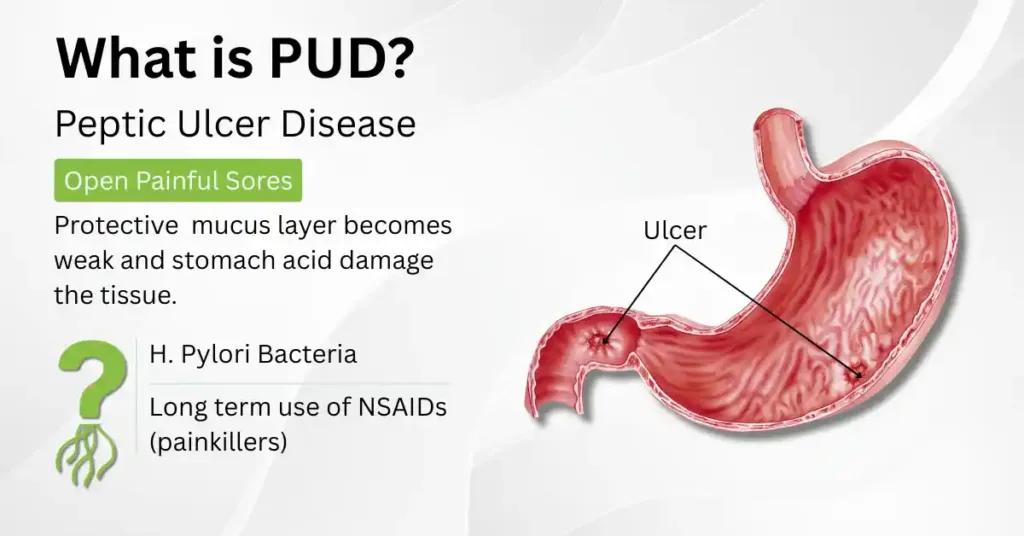
What is it?
Peptic Ulcer Disease (PUD) is when painful open sores forms in:
- the stomach lining → gastric ulcer
- the upper small intestine → duodenal ulcer
It happens when the protective mucus layer becomes weak, allowing stomach acid to damage the tissue underneath.
Why does it happen?
The most common causes are:
- H. pylori infection (a type of bacteria)
- Long-term use of painkillers like NSAIDs (e.g., ibuprofen)
- Other factors that disturb the balance between acid and natural protection
Who is at risk?
PUD can affect anyone, but patterns are often seen:
- Younger people → more likely to have duodenal ulcers
- Adults over 50 → more likely to have gastric ulcers
Why early treatment matters
If ignored, ulcers can become serious and lead to:
- Internal bleeding
- A hole in the stomach or intestine (perforation)
Early diagnosis and treatment can prevent these complications.
Quick takeaway
- PUD = sores caused by acid damage
- Main causes = H. pylori + painkillers (NSAIDs)
- Don’t ignore symptoms — early care is key
Types of Ulcers: Gastric vs Duodenal
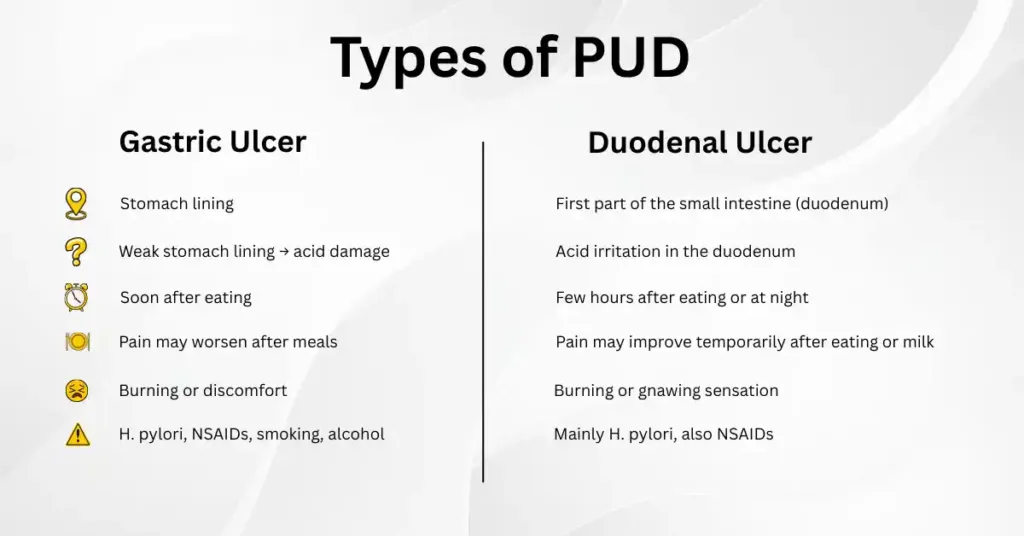
Peptic ulcers mainly occur in two locations, the stomach and the first part of the small intestine (duodenum). While both share similar causes, their symptoms and patterns can differ.
Gastric Ulcer (Stomach)
A gastric ulcer forms on the lining of the stomach, often due to weakened mucosal protection against stomach acid. A key sign is pain that typically appears shortly after eating, as food stimulates acid production. Other symptoms may include bloating, nausea, and reduced appetite. Common triggers are Helicobacter pylori infection, long-term NSAID use, smoking, and excessive alcohol.
Duodenal Ulcer (First Part of Small Intestine)
A duodenal ulcer develops in the first section of the small intestine, just beyond the stomach. The classic symptom is pain several hours after meals or at night, which often improves temporarily after eating or drinking milk. Many patients also experience a burning or gnawing sensation. The main causes are similar to gastric ulcers, with H. pylori being the most common factor.
| Feature | Gastric Ulcer (Stomach) | Duodenal Ulcer (Small Intestine) |
|---|---|---|
| Location | Stomach lining | First part of the small intestine (duodenum) |
| What causes it? | Weak stomach lining → acid damage | Acid irritation in the duodenum |
| Pain timing | Soon after eating | Few hours after eating or at night |
| Effect of eating | Pain may worsen after meals | Pain may improve temporarily after eating or milk |
| Pain type | Burning or discomfort | Burning or gnawing sensation |
| Other symptoms | Bloating, nausea, low appetite | Less bloating, more hunger-related discomfort |
| Common causes | H. pylori, NSAIDs, smoking, alcohol | Mainly H. pylori, also NSAIDs |
| Common in | More common in older adults | More common in younger people |
Signs and Symptoms of PUD & Red Flags
Common symptoms
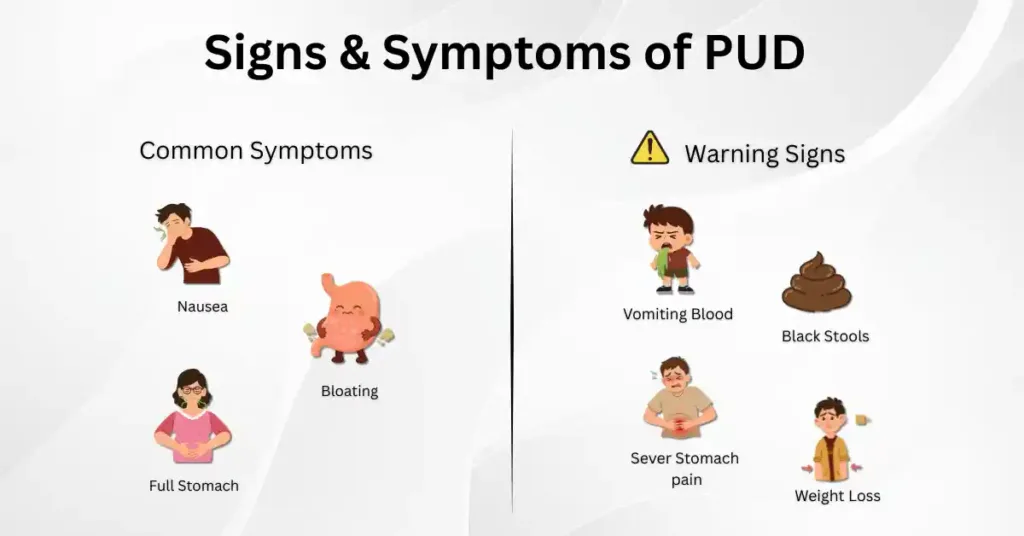
The most common symptom is Burning pain in the upper abdomen (epigastric pain) it can be mild to severe and may come and go.
Other symptoms may include:
- Nausea
- Bloating
- Feeling full quickly even after small meals
Warning Signs (Red Flags)
These symptoms may indicate a serious complication and need urgent medical attention:
- Vomiting blood or material that looks like coffee grounds
- Black or tarry stools (a sign of internal bleeding)
- Sudden, severe stomach pain (possible perforation)
- Unexplained weight loss
- Persistent vomiting
Quick Reminder
- Mild, recurring pain → don’t ignore
- Red flag symptoms → seek medical help immediately
Causes of PUD & Risk Factors
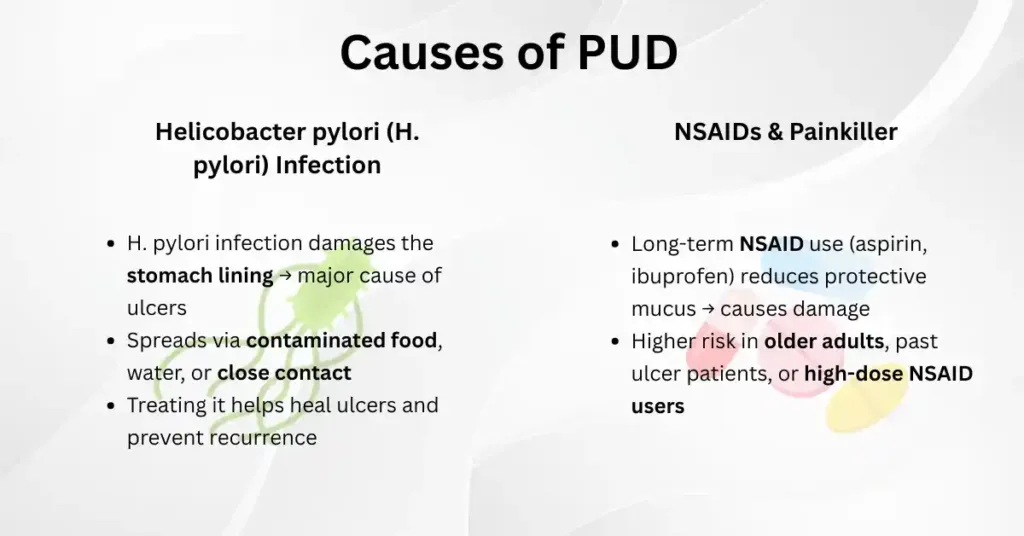
PUD develop when the imbalance happens between the stomach’s protective lining and damaging factors such as acid and bacteria. Several causes and risk factors can contribute to this imbalance.
Main Cause: Helicobacter pylori (H. pylori) Infection
The bacterium Helicobacter pylori is one of the leading causes of peptic ulcers worldwide. It weakens the stomach and duodenal lining, making them more vulnerable to acid damage.
Testing for H. pylori is important because treatment not only heals the ulcer but also reduces the chance of recurrence. The infection spreads mainly through contaminated food, water, or close contact. If left untreated, H. pylori can lead to complications like bleeding or even stomach cancer.
NSAIDs and Painkillers
Frequent or long-term use of nonsteroidal anti-inflammatory drugs (NSAIDs) such as aspirin, ibuprofen, and diclofenac can damage the stomach lining by reducing protective mucus production.
This risk is higher in older adults, people with a previous ulcer history, and those taking high doses or multiple NSAIDs.
Other Contributors
Lifestyle and health factors can also play a role. Smoking slows ulcer healing and increases recurrence risk, while heavy alcohol use irritates and erodes the stomach lining.
Severe physical stress from major illness or surgery may trigger ulcers, and certain chronic conditions like liver or kidney disease can increase susceptibility.
How Peptic Ulcers Are Diagnosed
Diagnosing a peptic ulcer involves confirming its presence, identifying the cause, and checking for possible complications. Doctors often start with noninvasive tests to detect H. pylori infection, the most common cause of ulcers.
- Urea breath test – You drink a special solution, and your breath is analyzed for gases that indicate H. pylori activity.
Stool antigen test – Detects H. pylori proteins in a stool sample, useful both for diagnosis and to confirm successful treatment.
If symptoms are severe, persistent, or include red flags like bleeding, an upper endoscopy is recommended.
This procedure uses a thin, flexible tube with a camera to directly view the stomach and duodenum. During endoscopy, the doctor can also take a biopsy, a small tissue sample to check for H. pylori and rule out other conditions, including cancer.
⚠ Disclaimer
The content provided in this blog is for educational and informational purposes only. It should not be taken as medical advice. Always consult a licensed healthcare professional before starting, changing, or stopping any medication. Treatment decisions should be based on a doctor’s evaluation of your individual health status and medical history.
Evidence-Based Treatment Options
Treatment for peptic ulcer disease focuses on healing the ulcer, removing its cause, and preventing recurrence. The approach depends on whether the ulcer is related to H. pylori infection, NSAID use, or other factors.
H. pylori Eradication Therapy
If H. pylori is present, eradication therapy is the standard of care. The most common first-line option is bismuth quadruple therapy for 14 days, which includes a proton pump inhibitor (PPI), bismuth, and two antibiotics. In some cases, a PPI-based triple therapy is used, but growing antibiotic resistance makes quadruple therapy preferable in many regions.
Adherence is crucial because incomplete treatment increases the risk of failure and resistance. After completing the course, a confirm eradication test (usually a urea breath test or stool antigen test) is recommended to ensure the bacteria is gone.
Treating Non-H. pylori or NSAID-Related Ulcers
Diet for Ulcer Relief: What to Eat & What to Limit
A peptic ulcer diet plan focuses on foods that support healing and reduce irritation.
The best PUD food includes:
- probiotic yogurt or curd,
- Ripe bananas
- Well cooked vegetables
- Lean proteins (chicken or fish)
- Whole grains
These ulcer-friendly meals help calm the stomach and promote recovery.
At the same time, limit triggers like alcohol, very spicy dishes, deep-fried snacks, and highly acidic foods such as citrus or tomato-based sauces. Avoiding these foods to avoid with ulcer can speed up healing and prevent discomfort. Adding more probiotic foods for ulcers may also improve gut health and reduce inflammation.
Lifestyle Tips to Prevent PUD & Recurrence
Adopting a few healthy habits can go a long way in preventing ulcer flare-ups and reducing the risk of recurrence. Eat smaller, balanced meals throughout the day instead of heavy portions, and avoid late-night eating to give your stomach time to rest. Quit smoking, as it delays healing and worsens ulcers. If you drink alcohol, do so in moderation or avoid it completely. For pain relief, steer clear of NSAIDs unless your doctor advises otherwise, and always discuss safer options with a healthcare professional.
Common Myths vs Facts
Many people have the wrong idea about what causes ulcers. Let’s clear up the most common myths:
Myth: Spicy food causes ulcers
Fact: Spicy food does not cause ulcers
- It may worsen symptoms in some people
- But it is not the root cause
Myth: Milk helps heal ulcers
Fact: Milk gives temporary relief only
- It can actually increase acid production later
- This may slow down healing
Myth: Stress causes ulcers
Fact: Stress alone is not a direct cause
- Most ulcers are due to:
- H. pylori infection
- Long-term NSAID use
You may also like
- Asthma Made Easy: 7 Essential Facts, Treatment Options & Exam Notes for D.Pharm Students
- Analgesics: Mechanism, Uses, Side Effects.
FAQ
How do doctors confirm an ulcer without endoscopy?
Which is better for ulcer pain PPI or H2 blocker
Can ulcers come back after H. pylori cure?
Is it safe to take painkillers if I had an ulcer?
Conclusion
Ulcers can be effectively managed with timely diagnosis, the right treatment approach, and supportive dietary and lifestyle habits. Whether caused by H. pylori, certain medications, or other factors, understanding your options from noninvasive tests to appropriate medicines can make a big difference. By following medical advice, making healthy food choices, and avoiding triggers, you can reduce discomfort, prevent recurrence, and protect your long-term digestive health.