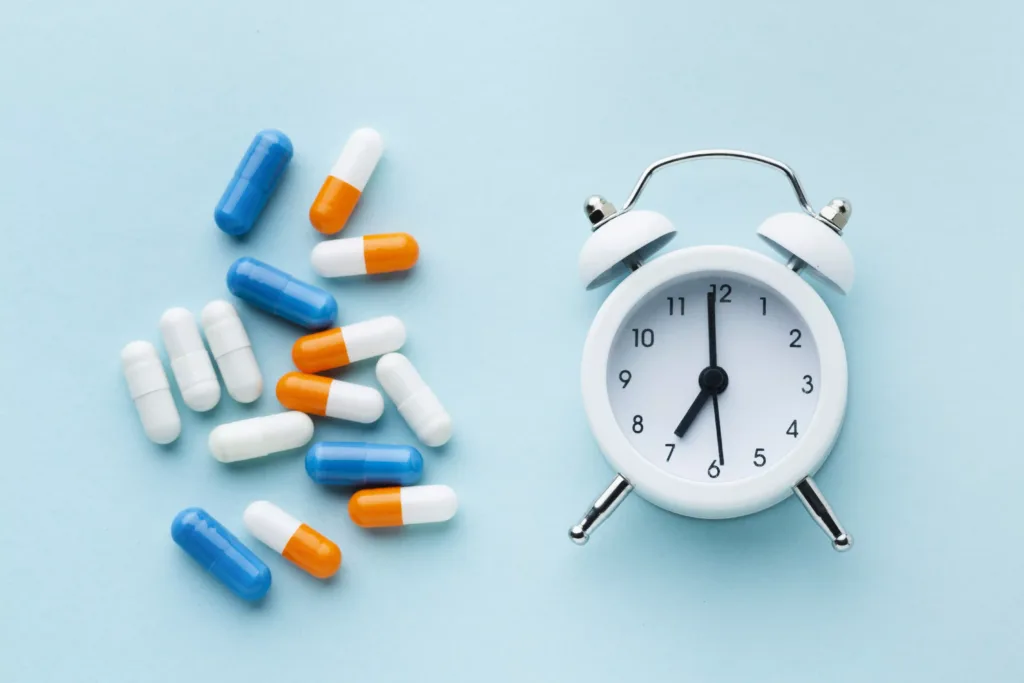
Imagine this – It’s 8 AM, and you’re rushing through breakfast. You grab all your medicines – antibiotics, vitamins, painkiller and swallow them together with your morning tea. Sound familiar? If you nodded yes, you’re among the 99% of people unknowingly sabotaging their treatment. As a pharmacist, I see this daily, and today I’m sharing the simple rules about “how to take medicines correctly” that can make your medicines actually work the way they’re supposed to.
Understanding Medicine Half-Life: Why Timing Matters
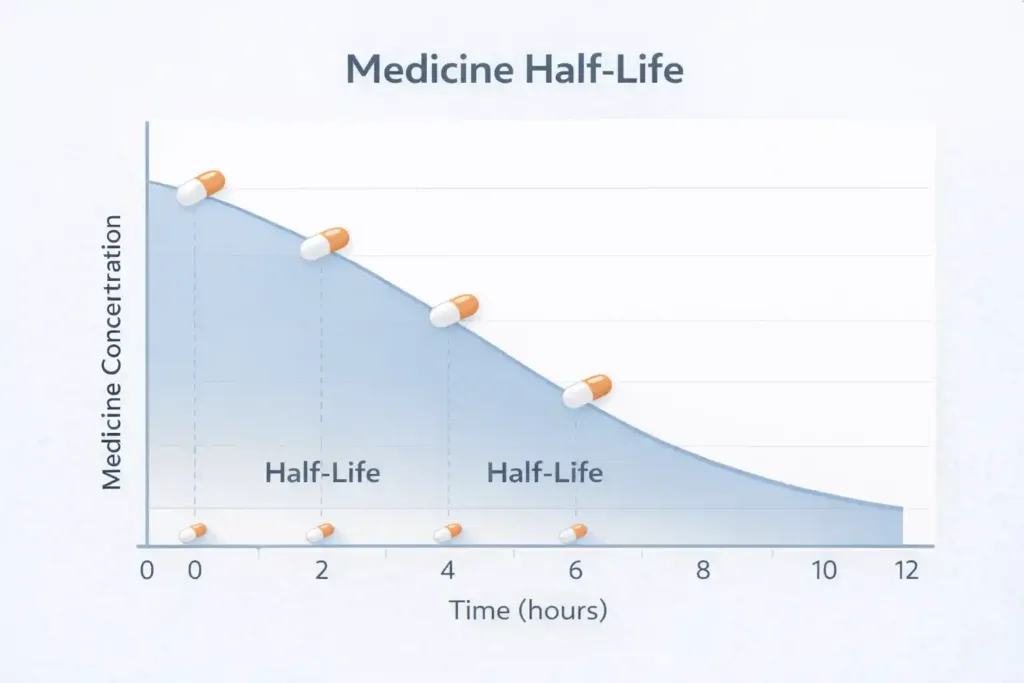
Ever wondered why your doctor insists on “take this every 8 hours” or “twice daily”? It’s all about something called half-life, the time it takes for half the medicine to leave your body.
Think of it like your phone battery. Paracetamol has a half-life of about 2-3 hours. Take 500 mg, and after 3 hours, only 250 mg is working. By 6 hours, it’s nearly gone which is why you need another dose. But metformin (diabetes medicine) can last 4-6 hours, so twice daily dosing keeps steady levels in your blood.
This isn’t just technical jargon. When you take medicines at random times, blood levels spike and crash. Too high? Side effects. Too low? The medicine doesn’t work. Consistent timing maintains that sweet spot where medicines are most effective and safest.
The Food Timing Rules: Before, With, or After?
This is where most people get confused. Here’s the truth: food affects how medicines absorb into your bloodstream.
Take 30-60 Minutes Before Food
Antibiotics like amoxicillin and azithromycin work best on an empty stomach. Food can block up to 50% of absorption. Same goes for levothyroxine (thyroid medicine)—take it first thing in the morning, wait 30 minutes, then eat breakfast.
Why? An empty stomach has better acidity and faster movement, helping these medicines reach your bloodstream quickly.
Take With or Just After Food
NSAIDs (ibuprofen, diclofenac, aspirin) are stomach irritants. Taking them on an empty stomach can cause ulcers over time. Always take with food or milk.
Metformin (diabetes medicine) also needs food to prevent nausea and stomach upset. Take it with your first bite of meals.
Iron supplements absorb better with vitamin C (orange juice works), but take with food if they upset your stomach.
Why? Food acts as a buffer, protecting your stomach lining while the medicine dissolves slowly.
Timing Doesn’t Matter
Paracetamol and most blood pressure medicines (amlodipine, telmisartan) can be taken with or without food. Your choice won’t affect how they work.
Common Medicine-Specific Guidelines
Antibiotics: The Golden Rules
Timing is critical: If prescribed every 8 hours, set alarms for 8 AM, 4 PM, and midnight
Complete the course: Stopping early (even if you feel better) breeds resistant bacteria
No alcohol: It reduces effectiveness and increases side effects
Gap from antacids: Wait 2 hours before or after
Blood Pressure Medicines
Morning types (diuretics like furosemide): Take early to avoid nighttime bathroom trips
Night types (some beta-blockers): Better control when taken before bed
Ask your doctor which type you have—it matters
Diabetes Medicines
Before meals (15-30 min): Most oral diabetes drugs need this timing to control post-meal sugar spikes
Never skip meals after taking these—risk of dangerous low blood sugar
Consistent meal times help maintain steady blood sugar
The Calcium-Iron Rule
Never take calcium and iron supplements together. Calcium blocks iron absorption. Take calcium with breakfast, iron with dinner (or vice versa). Space them by at least 4-6 hours.
Antacids: The 2-Hour Gap
Antacids neutralize stomach acid, which many medicines need for absorption. Take other medicines at least 2 hours before or after antacids.
The 5 Most Common Mistakes
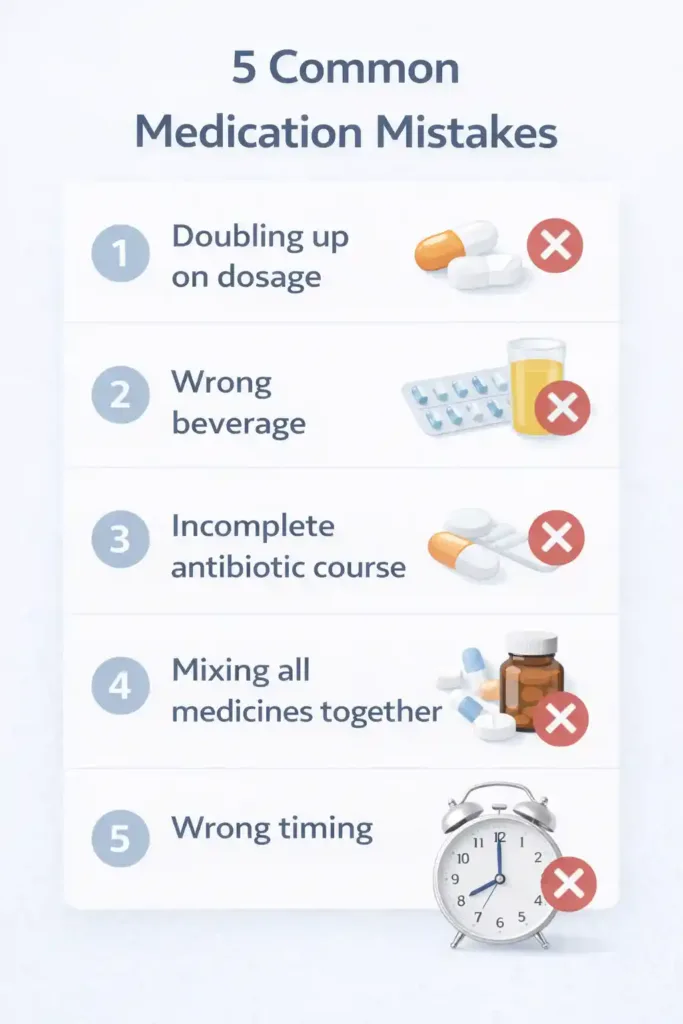
Skipping doses then doubling up: Missing a dose doesn’t mean taking two next time. It creates dangerous spikes and increases side effects. Just take the next regular dose.
Taking with wrong beverages: Milk blocks antibiotics, grapefruit juice affects dozens of medicines, and alcohol amplifies side effects. Stick to plain water.
Stopping antibiotics early: Feeling better after 3 days doesn’t mean infection is gone. Bacteria hide and return stronger. Complete the full course.
Not spacing medicines: Taking all medicines together can cause interactions. Some cancel each other out, others become toxic when combined.
Ignoring “empty stomach” instructions: “Take on empty stomach” means 1 hour before or 2 hours after food. Not “take with breakfast.”
⚠ Disclaimer
The content provided in this blog is for educational and informational purposes only. It should not be taken as medical advice. Always consult a licensed healthcare professional before starting, changing, or stopping any medication. Treatment decisions should be based on a doctor’s evaluation of your individual health status and medical history.
Your Quick Action Checklist
Before leaving the pharmacy, ask these three questions:
“Should I take this with food or on an empty stomach?”
“What exact times should I take this each day?”
“Are there any medicines or foods I should avoid while taking this?”
Practical tips:
🔔 Set phone alarms with medicine names as labels
📃 Use a simple chart: Morning (with breakfast), Afternoon (before lunch), Evening (with dinner), Night (bedtime)
💊 Keep a weekly pill organizer it’s not just for elderly people
📞 If you forget a dose, call your pharmacist before doubling up
Conclusion
Taking medicines correctly isn’t complicated—it just requires a little knowledge and consistency. Understanding whether your medicine needs food, knowing its half-life, and following timing instructions can dramatically improve treatment outcomes. Your medicines are only as good as how you take them.
Remember: your pharmacist is your medicine expert. Next time you pick up a prescription, spend two extra minutes asking questions. Those two minutes could be the difference between treatment success and failure.