

Table of Contents
Introduction to Gonorrhoea and Syphilis
“Sexually transmitted infections” or STIs are a major public health concern globally. Infections caused by STIs are generally contracted through sexual contact, whether that is vaginal, anal, or oral. Gonorrhoea and Syphilis are two of the many STIs, which are actually caused by certain types of bacteria.
Gonorrhoea is one of the oldest STIs, recognized for a long Both of these conditions can be prevented and treated, yet millions of people are affected with these conditions every year. Because of lack of information, unprotected sex, and late diagnosis, infertility, damage to major organs, and contracting HIV can occur.
Education on these conditions is very important for healthcare professionals, school-going individuals, and everyone else, since with immediate medical attention, complications can be prevented.
In this blog, we will briefly introduce the topic of gonorrhoea and syphilis and then discuss them in detail so as to cover all necessary information related to the definition of gonorrhoea and syphilis, its causes and pathogenesis, signs and symptoms, and management of the disease.
We will also aim to clarify any misconceptions regarding the disease and its management among people as a whole and among
Learn More About the Gonorrhoea:- WHO Guidlines
What is Gonorrhoea?
Gonorrhoea is a sexually transmitted disease caused by the bacterium Neisseria gonorrhoeae. It mainly attacks the mucous membranes of the reproductive system, like the urethra in men and the cervix in women. It may also infect the rectum, throat, and eyes. It is transmitted through direct sexual exposure, such as vaginal, anal, and/or oral sex, and from mothers to infants during childbirth.
Gonorrhoea Causes
The bacteria that cause this infection are Neisseria gonorrhoeae, which are gram-negative. The bacteria possess special features such as pili and outer membrane proteins that help them bind with the lining of the genital tract.
Transmission
The bacteria are transferred into the body by sexual contact with an infected individual. The bacteria then attach to the mucus surfaces in the body and start to reproduce.
Disease Process
After the bacteria have gained entry, they cause inflammation in the area they affect. Men will experience this process in the urethra, leading to pain, irritation, or drainage, while women will begin with the cervix, subsequently spreading to the uterus, developing into a situation called Pelvic Inflammatory Disease (PID).
Without treatment, the bacteria could find its way into the bloodstream, leading to various health issues, including problems related to joints, hearts, among others.
Symptoms of Gonorrhoea
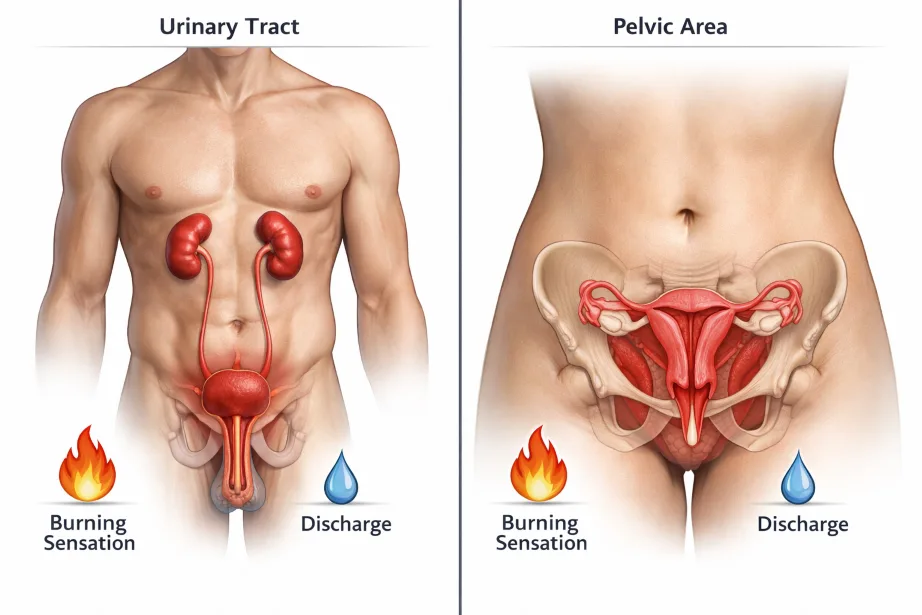
The symptoms of gonorrhoea are not the same for everyone, and sometimes the disease can occur without any symptoms, especially in women. But when symptoms do appear, they usually begin within 2 to 14 days of infection.
Symptoms in Men
- Burning or pain during urination
- Thick, yellow or green discharge from the penis
- Sometimes there may be pain or swelling in the testicles.
Symptoms in Women
Often, women have no symptoms (which is why the disease continues to spread unknowingly)
If symptoms are present:
- Unusual vaginal discharge
- Burning sensation during urination
- Bleeding between periods or after sex may occur.
Infections in other areas
- Anus (Rectum): Pain, itching, discharge
- Throat: Mild sore throat
- Eyes: Redness and pus-like discharge
- Spread throughout the body: If the bacteria enter the bloodstream, there may be joint pain and swelling.
Management of Gonorrhoea

Non Pharmacological Management
A comprehensive overview is given below for the non-pharmacological treatment of gonorrhoea.
It is imperative to note that, this information is essential for prevention, in addition to preventing the spread of the infection.
Safe Sexual Practices
This is the most efficient means of protecting against acquiring infections. This prevents infection not only through abstinence and focusing on safe sex practices.
Usage of Barrier Methods:
Each time during vaginal, anal, or oral sex practices, latex Condoms must be used to avoid direct exposure to the bacteria.
Consistency and Proper Usage:
It is always important to use condoms throughout the sexual act. It is also important to check the expiration dates when using condoms to prevent the risks associated with breaking or slipping.
There Should Be a Limited Number of Sex Partners:
Monogamy, where one has sex with only one loyal sexual partner, is one of the best ways to prevent contracting infections.
Notifying Partners of the Infection
Prevention of Reinfection:
If one member of a relationship is treated for the infection while the other member is still infected, the previously infected member can become re-infected from the other when they have recovered because this is referred to as ‘ping pong effect‘.
Honest Communication:
When a person tests positive for gonorrhoea, they must contact all of their sexual partners for the past 60 days in order for them to be tested for this disease.
Sexual Abstinence:
Sexual activities must be avoided entirely until the time that both partners have finished their treatment course and the symptoms have resolved (usually after 7 days post-treatment).
Testing & Screening
Gonorrhoea can also be “silent,” meaning the infection can be present in the body without causing any noticeable signs of the disease.
Routine Testing:
Sexually active individuals, especially women aged 25 and below and who have multiple sexual partners and fall into a high-risk group, should have testing done at least once a year. Asymptomatic infection: Women have been found to have greater chances of being asymptomatically infected with the throat and rectal infections.
During pregnancy:
Pregnant women should be screened for this disease in the first trimester to ensure the disease does not reach the baby.
Education and Awareness
Disseminating correct information in society assists in getting rid of the disease because the symptom identification. People should be aware of symptoms like burning while urinating, unusual discharge, pelvic pain, in order for them to seek treatment.
De-bunking myths:Lots of people believe “This couldn’t possibly happen to me” or “I am not sick because I do not have symptoms.” It is crucial that we break such myths.
Reducing stigma: There is a need to reduce the stigma of sexually transmitted diseases, allowing people to get accessed to medical treatment.
Pharmacological Management
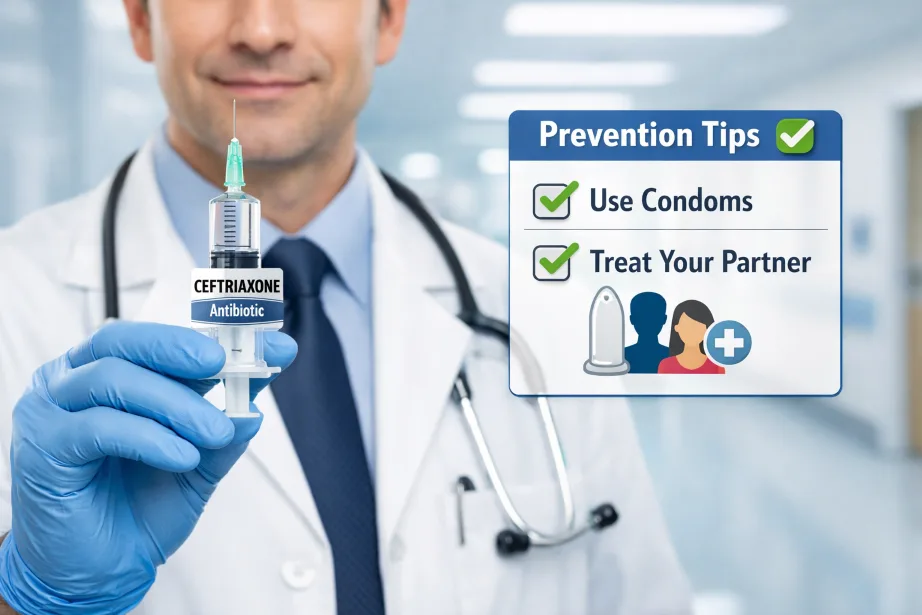
Primary Treatment
Note: The information given here is for knowledge only and should not be used to treat any medical condition.
It is the most effective remedy to treat gonorrhoea.
- An intramuscular injection of Ceftriaxone (500 mg or 1g) is given.
- It is an antibiotic that effectively halts the infection with the rapid destruction of the bacteria’s cell wall.
Co-treatment
The patients with gonorrhoea usually also have chlamydia.
- A single dose of Azithromycin is taken orally (1 g).
- This way, there would be double protection, which would be an additional factor in preventing antibiotic resistance.
Alternative Medications
If there is an allergy to the cephalosporin class of medications and/or Ceftriaxone is not available, then the following medications can be used:
- The doctor can choose to give Spectinomycin injection or Gentamicin along with Azithromycin.
The choice depends solely on the doctor. Partner Treatment Both the patient and his or her sexual partners should be treated at the same time. When a drug is taken just by one individual, it causes re-infection after healing.
Please note: The full course of the antibiotic must be strictly followed even if the symptoms are reduced or eliminated in order to eliminate the bacteria.
You May Also Like
Syphilis
Though this is an infectious disease transmitted via sex, it is also transmitted from mother to child during pregnancy, and when this is not treated, this infection can impact many organs in the body, including the heart, brain, and nerves.

Causes of Syphilis
The entry of the bacteria into the human body takes place through a small skin cut or a mucous membrane. This happens when the person comes into contact during sexual intercourse.
It is generally contracted through an opening in the skin, such as an ulcer or cut, and this is made possible through sexual contact.
The bacteria then invade and move through the body through the blood and lymph. The initial symptoms are restricted to a small area and manifest in the form of a painless sore, also considered the primary stage. If the treatment is not provided at this point, the bacteria affect other parts of the body, thus entering the second stage, which has symptoms such as skin rashes, fever, and weakness.
The disease then undergoes the latent stage, where the individual does not show symptoms but has the bacteria in their bodies.
If it is left untreated for many years, it goes to the tertiary stage. This is considered to be the most dangerous stage because the heart, brain, and nerves may be seriously affected.
Symptoms of Syphilis
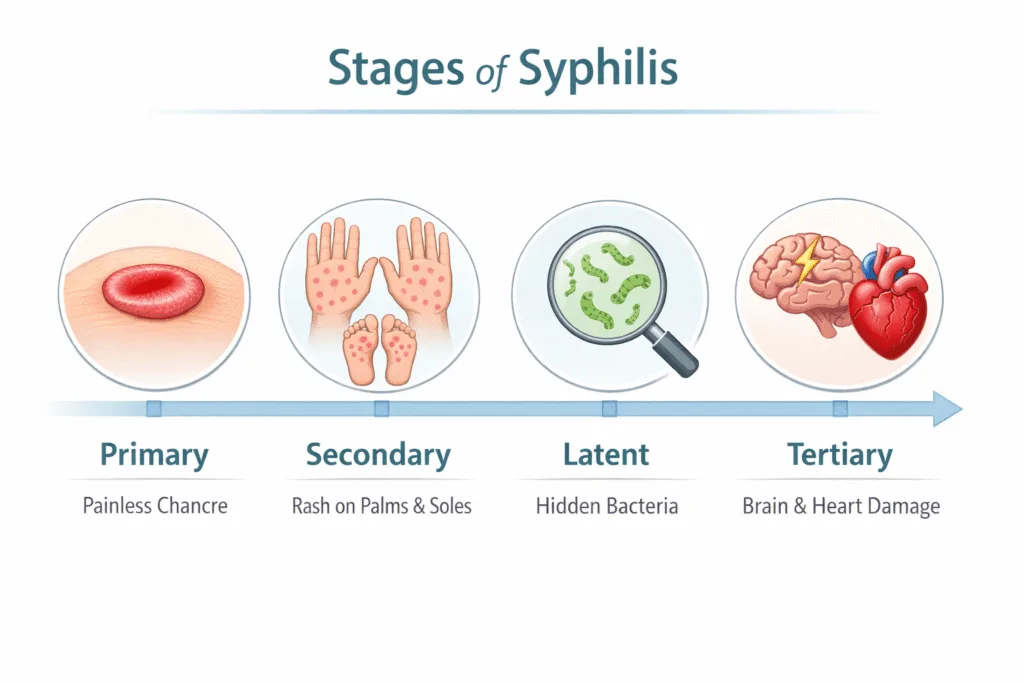
Syphilis is a progressive form of a sexually transmitted disease. It takes various forms as it progresses. The time that disease stays in the body determines what form it takes. Because the pain involved in the early symptoms is not a concern to the individual, the disease stays latent in the body.
Primary Stage
Approximately after 3 weeks of exposure to the infection, a solitary, hard, and painless ulcer or chancre forms where the exposure occurred. The ulcer usually occurs in the genital, anal, or mouth area. Although it resolves on its own in 3-6 weeks, the bacteria continue their activities in the body.
Secondary Stage
Without medical treatment, the disease progresses as the infection travels throughout the body by the bloodstream, a process known as “hematogenous spread.” At this stage, the rash is generalized, but the palms and soles are especially affected. Other systemic manifestations include fever, lymph node enlargement, and alopecia, or loss of hair. “Mucous patches” in the mucous membranes can also be noted.
Latent Stage
This represents the asymptomatic phase of infection. In this phase, the patient presents no apparent clinical manifestations but succeeds in demonstrating positive serological tests for the bacteria. This phase may continue for an indefinite period of time.
Tertiary Stage
This represents the last stage of syphilis, which manifests many years after initial infection. This last stage of syphilis shows impairment of multiple organs, such as both the cardiovascular system and central nervous system (Neurosyphilis). This has symptoms of paralysis, dementia, and cardiovascular problems. Congenital Sy Congenital syphilis refers to syphilis that can be passed along vertically from a pregnant woman who is infected to her infant. This is known to cause symptoms like skin lesions, bone deformities, and severe developmental delays among infants.
Management of Syphilis
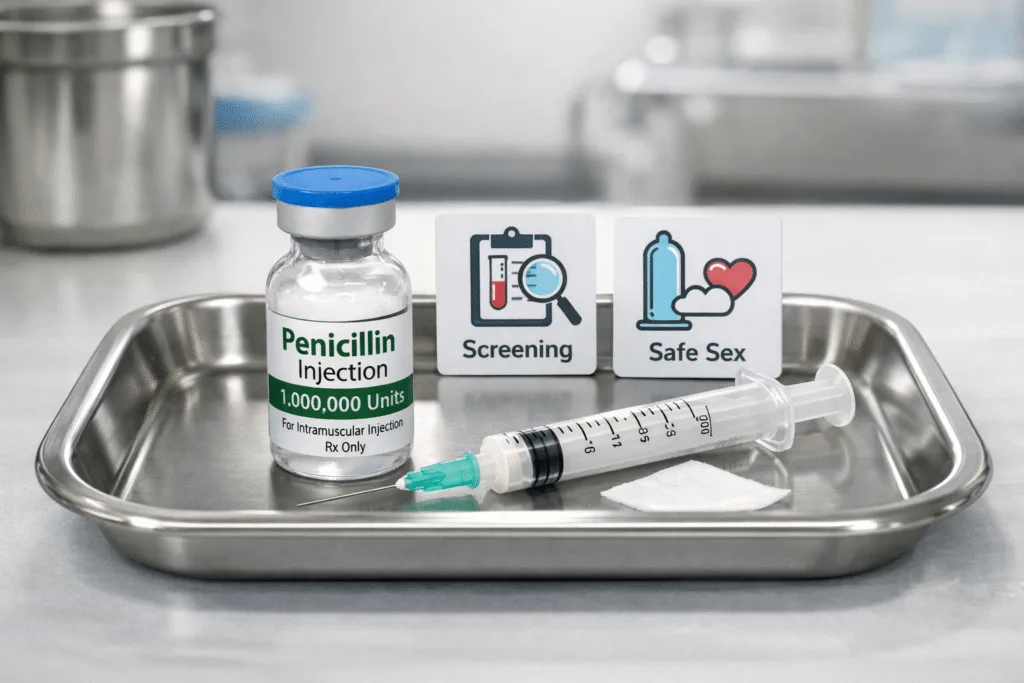
It is important to treat syphilis at the right time, otherwise the disease can gradually damage many parts of the body. The good news is that syphilis can be completely cured if the right medication is given on time.
Non-Pharmacological Management
- Safe sexual practices: Always use condoms and maintain a monogamous relationship.
- Informing your partner: If someone has syphilis, their sexual partner should also get tested and treated.
- Regular check-ups: This is especially important for pregnant women to protect the baby from infection.
- Awareness: Providing people with accurate information about the disease so they can seek timely treatment.
Pharmacological Treatment
Main Medication for Syphilis
First-line Treatment
Benzathine Penicillin G is the most effective and preferred medication.
Early Stages (Primary & Secondary Syphilis)
A single intramuscular injection of 2.4 million units is given.
Late Latent / Chronic Syphilis
One injection per week
Treatment duration: 3 weeks (total 3 injections).
Neurosyphilis / Ocular Syphilis
When the brain or eyes are involved:
Intravenous (IV) Penicillin is administered
Treatment is done in a hospital setting.
If the Patient is Allergic to Penicillin
Alternative medications:
Doxycycline
Tetracycline
⚠️ These are not recommended in pregnancy.
Penicillin Allergy in Pregnant Women
Penicillin desensitization is performed first.
After desensitization, penicillin is administered, as it is the safest option for both mother and foetus.
Comparison between Gonorrhoea and Syphilis
| Aspect | Gonorrhoea | Syphilis |
|---|---|---|
Causative organism |
Neisseria gonorrhoeae (bacterium) |
Treponema pallidum (spirochete bacterium) |
Mode of transmission |
Sexual contact; mother to child during childbirth |
Sexual contact; mother to child during pregnancy |
Main symptoms |
Burning during urination, discharge, sometimes pain |
Painless sore; later rashes and fever |
Complications |
Pelvic inflammatory disease (PID), infertility, joint infections |
Damage to the heart, brain, and nerves |
Complications |
Antibiotics (Ceftriaxone, Azithromycin) |
Penicillin (Benzathine Penicillin G) |
Prevention |
Condom use; partner testing |
Condom use; screening of pregnant women |
Conclusion
Both gonorrhea and syphilis are serious sexually transmitted diseases, but the good news is that they are completely curable if detected early and treated properly. The best way to prevent these diseases is through safe sexual practices, regular check-ups, and awareness.
If you experience any symptoms or are at risk, contact a doctor immediately. Remember, delaying treatment can worsen the disease and cause permanent damage to the body.
FAQs
- Gonorrhoea: Burning sensation while urinating, thick yellow or green discharge from the penis, sometimes pain or swelling in the testicles.
- Syphilis: In the early stage, a small painless sore (chancre) on the penis, anus, or mouth. Later, skin rashes and flu-like symptoms can appear.
A painless sore (chancre) at the site of infection, usually on the genitals, anus, or mouth.
The presence of a single, firm, painless ulcer (chancre) where the bacteria entered the body.
In many cases, especially in women but sometimes in men, gonorrhoea shows no symptoms at all. This means a person can carry and spread the infection without knowing.
Yes. Syphilis can be completely cured with the right antibiotics, usually penicillin, if treated early.